Conversion Seasonality in Fintech: Trading, Crypto, and Loan Services
Learn when trading, crypto, and loan campaigns perform best, why user activity changes, and how to optimize conversions throughout the year.
24 Dec 2025
Conversion can be seen as an indicator of how effectively a business interacts with its customers and how well the product meets their needs. In this article, we will explore the factors that influence CR, how user behavior changes, and how to evaluate campaign performance across different periods.
When Do Fintech Conversions Grow and How Does Seasonality Affect Them?
Fintech conversions increase during periods of heightened consumer activity and market dynamics. Peaks often occur during holidays, periods of increased spending, or high market volatility. Demand is driven by both economic factors and behavioral triggers.
How Does User Activity Change by Month and Quarter?
At the beginning of the year, users set financial goals and evaluate investment opportunities. Activity often declines in the third quarter. In the fourth quarter, it increases again as users summarize financial results and spending grows.
How Does Seasonality Affect CR in Trading and What Changed in 2025?
In Q1 2025, activity declined after the holiday period. In Q2, there was moderate growth. In Q3, performance remained relatively stable, while in Q4, activity increased significantly. Economic measures partially smoothed fluctuations, but seasonal peaks still remain.
When Does Crypto Deliver the Best Performance?
The crypto market typically becomes more active in the second half of the year. CR growth in the fintech vertical often begins in autumn and strengthens toward the end of the year. Historically, peak market interest forms within 12–18 months after a Bitcoin halving, although exact timing may vary from cycle to cycle. Altcoins usually start growing after BTC stabilizes, but without fixed timelines.
Seasonality in Credit Services
Seasonality in credit products is directly tied to consumer behavior. At the beginning of the year, demand for consumer loans increases. In autumn and before holidays, installment usage grows. After holidays, demand may decline due to financial fatigue.
Demand Periods for Loans and Installments
Demand is unevenly distributed throughout the year: moderate growth may occur in summer, while interest in BNPL and installment plans increases toward the end of the year as users try to spread expenses.
What to Consider When Planning a Budget?
A significant share of fintech demand occurs in the second half of the year, especially in Q3 and Q4. At the same time, it is important to consider macroeconomic factors, regulation, and changes in user behavior that may affect market dynamics.
CR Dynamics Across Verticals
Conversion rates strongly depend on the funnel stage.
In crypto and trading, registration CR can reach 8–10% during active market phases.
In credit services, application CR typically ranges from 5–7%, but depends heavily on seasonality, GEO, and product conditions.
Where Is Response Higher: Short-Term vs Long-Term Trends
Crypto platforms develop cyclically and depend on market phases. Credit products are more influenced by household income levels and seasonal demand peaks.
How Metrics Change After Market Volatility
After sharp market changes, conversion may decline and then recover within several days to a week once conditions stabilize. In trading, increased volatility often leads to spikes in activity. In credit products, demand may decrease for several weeks until users adapt to new conditions.
When to Strengthen Campaigns and Scale
Scaling makes sense only when core metrics are stable. Focus on CPA, CR, and ROAS. If ROAS remains consistently positive and the flow of target actions is stable, budgets can be increased.
Traffic Sources for Fintech Promotion
For testing hypotheses and collecting initial data, push, popunder, native, and banner formats work well. They allow quick evaluation of audience response and scaling of successful setups.
Push and Popunder for Fast Testing
Combining push and popunder helps quickly identify effective creatives and setups. This allows comparison of CTR and CR and redistribution of budget toward the most efficient options.
Traffic for Crypto vs Credit Products
The audience for credit products is more cautious and sensitive to trust. Offers should include clear conditions and strong trust signals.
Crypto audiences are more reactive and sensitive to industry and economic changes, so dynamic and fast communication performs better.
Localization and Landing Page Requirements
It is important to consider technical and UX parameters.
Recommended page weight is up to 1–1.5 MB, and load time should be within 2–3 seconds.
Users make decisions within the first 3–5 seconds, so key offer elements must be visible immediately. Localization for payment methods and currency is also essential.
How to Predict Seasonal Peaks
Accurate analytics setup, event validation, and statistical significance are critical. Campaign performance should be evaluated through the combination of LTV, CR, and acquisition cost. For example, acceptable CPC can be estimated as LTV multiplied by CR.
Historical Data and Macroeconomic Indicators
For forecasting, it is important to consider key macro indicators: central bank rates, inflation, income levels, and unemployment. Analyzing past periods helps identify recurring patterns and plan campaigns more accurately.
Tracking KYC and Registration Conversions
It is important to track not only clicks but also key funnel stages, including registration and KYC. Using UTM tags, CRM tools, and API analytics helps identify bottlenecks and optimize campaigns.
How to Prepare a Campaign in Advance?
Define goals and KPIs, research your audience and competitors, set up analytics and tracking, test hypotheses through A/B tests, and only then scale the campaign.
FAQ
When does conversion growth in trading begin?
Growth usually aligns with periods of high volatility and major macroeconomic events. Activity also increases during earnings seasons and strong market movements.
When does crypto deliver the best CR?
Higher performance is typically observed in the second half of the year. Growth intensifies after market stabilization and during active cycles, but exact timing may vary.
What should be considered when launching campaigns during low demand?
During low seasons, competition and traffic costs decrease. This is a good time to test hypotheses, creatives, and audiences in preparation for demand growth.
How do you know when it’s safe to scale a campaign?
Look for stable CR, predictable CPA, and consistently positive ROAS over time. If metrics remain stable, scaling becomes safer.
Which metrics matter most in fintech?
Beyond CTR and CR, it is important to track deeper funnel events such as registration, KYC, deposits, and LTV, as they reflect the real value of traffic.





Read Also
More Precise Adult Targeting: 40+ Subcategories in Kadam
DarkSword Reached Ad Traffic: Why a Normal Landing Page Can Hide an iOS Attack
Direct Advertiser vs Ad Network Which Model Is Better

Managing CPC Campaigns with Auto Rules
VAST Creatives Are Now Available in Kadam Video Campaigns
What Is Retargeting Advertising and How Does It Work

New Ways to Add HTML Creatives
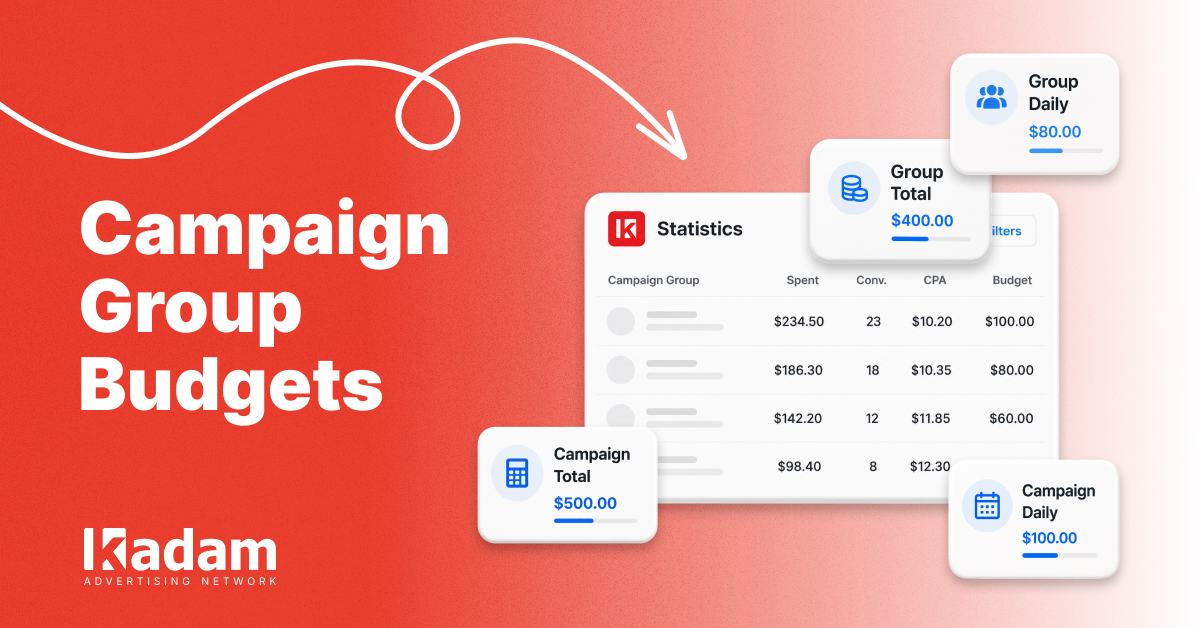
Campaign Group Budgets: Limits at a Glance

Retargeting Ads Explained: When and How to Bring Lost Customers Back