Retargeting Ad Formats: Push, Popunder, Native and Display Ads Comparison
Compare push, popunder, native, and display retargeting ad formats to choose the right channel for user re-engagement, performance campaigns, and traffic acquisition.
15 Jul 2026
For advertisers, affiliate marketers, and performance specialists, retargeting is not only a way to show the advert again. It is a structured approach to bring users back after the first contact with a product, offer, landing page, app, or brand. The issue is that users do not all exit for the same reason. Some need a gentle reminder, some need more information. Others want a bigger push, better timing, or a different path back into the funnel.
That is why retargeting ad formats do matter. Push, popunder, native, and display do not engage people in the same manner. Each format has its own strengths, creative needs, pricing structure, and function across the customer journey.
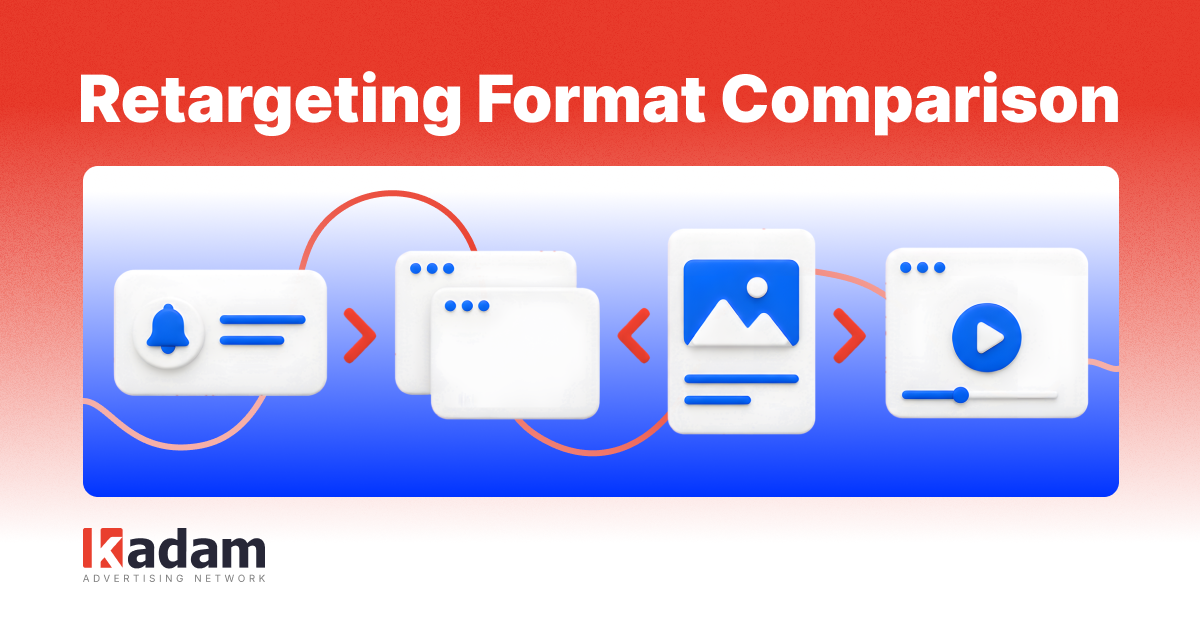
A push ad can deliver a short, direct message. A popunder can send users back to a landing page or promotional page. Native can warm up users through content and storytelling. Display can keep the brand visible after the first visit. None of these formats is automatically the best. The right choice depends on the campaign goal, vertical, audience behaviour, GEO, funnel stage, budget, and available creatives.
What Are Retargeting Ad Formats
Retargeting ad formats are ad types used to reach people who have already interacted with a brand, product, landing page, app, or a campaign. These users might have shown up on a page, clicked an advert, started signing up, put a product into a basket, installed an app, made a first deposit, or completed another early action.
The format sort of defines how the advertiser reconnects with the user. It influences where the advert shows up, how much room the message takes, how fast the user can act, and what kind of landing page or next step needs to exist.
In digital advertising, retargeting formats shape engagement, conversion rate, user experience, and overall campaign results. A format that performs nicely for a quick reminder might struggle when the product is more involved. Likewise, a format that pulls in high traffic volume can still require a focused landing page in order to convert.
The main idea of retargeting is to keep the conversation going after the first interaction. The format decides how that conversation is restarted, and whether the next touchpoint feels natural or disruptive.
Why Choosing the Right Retargeting Format Matters
Picking the wrong format can drain the strength out of the entire campaign. Even with a solid audience match, the message may not be delivered in the right way, at the right moment.
The format affects traffic cost, the creative workload, landing page strategy, and the whole user journey. Push ads usually need short copy and a sharp call to action, so the message is easier to swallow quickly. Popunder ads lean hard on the landing page, because the ad itself is not doing much once it is triggered. Native ads often need stronger headlines and visuals, plus sometimes a pre-landing step. Display ads rely more on visual identification and repeated exposure, so frequency becomes a quiet requirement.
The same format also shifts intent a bit. A person who taps a native placement after reading a headline might be in a different state of mind than someone who lands on a popunder page without that framing. And if a user gets a push reminder, they may already grasp the offer, they just need a reason to come back.
That is why advertisers should not pick retargeting ad formats only by price. Cost is relevant, but the key question is whether the format matches the user stage and the campaign objective.
Push Ads for Retargeting Campaigns
Push ads are short notification-style ads that show up through a browser or a device environment. They usually have a title, a short message, an icon or image, and a clear call to action.
For retargeting, push ads work well because they let the advertiser reach people who have already shown interest. The ads can nudge them toward an unfinished step, a limited-time deal, an extra bonus, an app event, a registration process, or a new product update.
The format feels simple and also quick. But it does not leave much room for long explanations so the text has to be very direct. Push tends to work best when the user already knows what is being offered, or when the next action is easy to understand.
Benefits of Push Retargeting
Push retargeting is helpful since it can be launched fast and it is easy to try. Marketers can set up several variations of messages, then compare response rates, and fine-tune the campaign by audience segment.
This format supports direct interaction. A quick note can pull users back to a landing page, app, registration form, deposit page, product page, or promotional section.
Another plus is segmentation. Advertisers may run different messages for people who viewed a page, signed up but did not complete the following step, left a basket, or became passive after a first action, that kind of thing.
When to Use Push Ads for Retargeting
Push ads fit well for reactivation efforts, limited-time offers, apps, promotions, reminders, bonus notifications, event-based messages, and plain funnel steps
For instance, an app can use push retargeting to bring users back after installation. An affiliate offer can nudge someone about an unfinished registration. An iGaming campaign can use push to share a time-sensitive promotion or a return incentive.
Push is less suitable when the product really needs a longer explanation. In that case, the push message nudges people toward a strong landing page, or even a pre-lander that finishes the story for them.
Push Retargeting Best Practices
Push messages should feel short and very specific. The user needs to get the offer quickly, and they should spot an obvious reason to tap, instead of guessing. Some best practices to follow include:
- Using one clear call to action;
- Matching the message to the user’s last action;
- Avoiding excessive frequency;
- Testing several titles and icons;
- Separating new, returning, and inactive users;
- Sending users to a relevant landing page;
- Tracking clicks, conversions, and post-click value.
The aim is not to send more notifications. The aim is to send more relevant ones.
Popunder Ads for Retargeting Campaigns
Popunder ads open a landing page in a separate tab or window, normally after the user interacts with a site. In retargeting, this ad type can help advertisers bring people back to one particular offer page, the promotion itself, a sign-up stage, or the conversion route.
Popunder works a bit differently from push. The user does not get a brief message first. Instead, the landing page carries most of the communication. Because of that, the first view becomes extra important: it should spell out the offer right away, load fast, and nudge the visitor toward the next step.
Popunder retargeting can be useful when advertisers want real traffic volume and direct-response landing page testing. It may fit affiliate campaigns too, iGaming, dating, app installs, utilities, sweepstakes, adult, and entertainment-related products.
The format should be managed carefully. If the landing page is slow, unclear, or too crowded, the visit can lose value quickly, and it happens faster than anyone expected. Also frequency settings matter a lot because too much exposure may reduce user comfort, and weaken long-term performance.
Native Ads for Retargeting Campaigns
Native ads are placements that show up closer to the surrounding content. They can resemble recommended articles, sponsored stories, content cards, or in-feed placements. In retargeting, native can help advertisers reconnect with people in a softer, more editorial-led way, rather than hitting them with something too direct.
Native retargeting is useful when the funnel needs a bit more context. Some users are not ready to convert after a short message, or a direct landing page. They may need extra context, a side-by-side comparison, trust signals, product education, or a clear reason to reconsider the offer.
This makes it fit natively for finance, health, e-commerce, subscription products, B2B tools, investment-style offers, and those longer affiliate funnels, even when the journey is a bit slower. It can also handle iGaming or entertainment campaigns when the advertiser wants editorial-style positioning, guide-driven creatives, review angles, or content tied to events.
Native typically needs more groundwork than push or popunder. The headline, the image, the angle, and the pre-landing page have to click together. If the creative feels like it is bending the truth, results may fall off, and user trust can weaken.
Display Ads for Retargeting Campaigns
Display ads are the visual slots like banner placements or graphic ads shown across websites, apps, or other media environments. For retargeting, display is often used so the product stays in view after that first visit.
Display ads can help with brand recall, product reminders, offer awareness, and repeated exposure. They are especially valuable when the decision process is not immediate. A user might need to see the product several more times before coming back.
The whole format pretty much depends on the visuals. A good display creative should feel clear, and recognisable. It should not overload the message, it should be easy to read even if the user is moving fast. The user may only glance at the banner so the main point needs to pop into view quickly.
Display retargeting is often a helpful piece of a larger strategy. It may not always own the last click, but it can help keep the product in mind while other channels are busy pushing the conversion part forward.
Push vs Popunder vs Native vs Display Which Format to Choose
The best way to compare retargeting ad formats is to see what practical job each one does inside the funnel.
| Format | User intent | Creative requirements | Traffic volume | Launch speed | Optimisation focus | Best use cases |
| Push | Medium, reminder-based | Short title, message, icon, CTA | Medium to high | Fast | Message, timing, segments | Reactivation, offers, app events |
| Popunder | Low to medium, landing-page driven | Fast landing page or pre-lander | High | Very fast | Sources, pages, GEO, frequency | Volume tests, affiliate funnels, promotions |
| Native | Medium, content-led | Headline, image, angle, content flow | Medium | Slower | Angles, pre-landers, audience context | Complex offers, education, warm-up funnels |
| Display | Low to medium, recall-based | Banner, visual identity, simple message | Medium to high | Fast | Frequency, placement, visual testing | Brand recall, reminders, multi-touch journeys |
There is not a single universal winner. Push might work better for direct reminders. Popunder might be better for landing page tests and sheer volume. Native may be more effective when the user needs extra context, because it feels less abrupt. Display might win when you need repeat visibility and brand recall.
How to Choose the Right Retargeting Format for a Campaign
Picking the correct format really starts from the campaign goal and sometimes people miss that part. If the aim is to get users back fast, then push or popunder can be more practical. If the aim is to educate, or rebuild some fading interest, native may land better. And when the goal is continued visibility, display tends to be the more steady option.
Then there is the vertical and where someone is in the funnel. Straightforward offers often work best with more direct ad formats. If the offer is more complex, it usually needs extra context around it. A person who abandoned a form may respond better to a different setup than someone who only stopped by a blog page, even if both are early visitors in the numbers.
Also, GEO, absolutely matters. User behaviour, device mix, ad tolerance, and how aggressive competitors are can shift a lot between markets. So a format that performs nicely in one GEO may not deliver the same outcome in another, even with the same creativity.
Finally, budget and creative resources should steer the decision. Native tends to demand more content preparation. Display calls for strong visual consistency. Push often benefits from message testing. Popunder typically depends on having a landing page that holds up quickly after the click.
How Advertisers Optimise Retargeting Campaigns Across Formats
Retargeting optimisation should be grounded in real data. Advertisers need to watch impressions, clicks, conversions, cost per action, conversion rate, return on investment, and what people do after they convert, because that later behaviour matters.
A/B testing is useful, but each format needs its own testing logic. Push tests usually lean on titles, icons, timing, and audience segments. Popunder tests usually lean on landing pages, traffic sources, frequency caps, and GEOs. Native tests usually lean on headlines, images, angles, and the content right before the landing. Display tests usually lean on banners, placements, frequency, and visual clarity.
Segmentation is also essential, but it has to be done carefully. Users should be grouped by last action, time since visit, value, device, GEO, and traffic source. A person who visited yesterday should not get the same sequence as someone who became inactive months ago.
How Advertisers Use Kadam for Retargeting Ad Formats
Kadam can help advertisers that want to test and manage retargeting across several ad formats from one platform. This platform processes more than 11 billion impressions per day, so advertisers get enough volume to test, launch, and scale campaigns across multiple GEOs, without having to wait on limited inventory.
Targeting covers GEO, device, operating system, browser, language, so advertisers can scope a test as narrowly or broadly as the offer requires. Retargeting tools can also help pull back users who visited a page, interacted with a campaign, or entered the funnel but did not convert the first time.
Traffic quality is checked at the source. Kadam filters by performance, not just raw volume, and its built-in anti-fraud system Kaminari click helps flag suspicious activity before it touches campaign budgets. For performance teams this matters a lot since retargeting relies on stable audience data and meaningful user behaviour.
Popunder is only one of several formats available inside the platform. Advertisers can also use push, in-page push, banner, native, and video ads, which makes it easier to manage acquisition, reach, and retargeting from the same account.
FAQ
What Is the Best Retargeting Ad Format?
There is no single best retargeting ad format. The best pick depends on the campaign goal, the audience, the vertical, the GEO, the funnel stage, and your budget. Push might work well for reminders, popunder can help with returns to a landing page, native fits warm-up funnel needs, and display supports visibility.
Are Push Ads Better Than Popunder Ads for Retargeting?
Push ads and popunder ads do different jobs. Push is better for quick short notices, reminders, and things that need to be seen fast. Popunder, on the other hand, is more effective when the advertiser wants to pull the user back to a landing page or promotional page, there is more room there for the offer.
Which Retargeting Format Works Best for Affiliate Marketing?
Most of the time affiliate marketers pick a format depending on the offer, GEO, payout model, the traffic source, and what kind of funnel they run. If the offer is simple, push or popunder can be enough. If the offer is more complex, then native or display can be a better fit.
How Do Native Ads Help With Retargeting?
Native ads support retargeting by giving users a bit more context before they convert. This format can use content, storytelling, reviews, comparisons, or educational angles to warm up people who need more understanding before they take action.
Can Advertisers Use Multiple Retargeting Formats Together?
Yes. Using a few different formats can make the retargeting strategy stronger, and more persistent. Push can send little reminders, popunder can bring users back to the landing page, native can tell the offer story clearly, and display can help with brand recall across the entire customer journey.
How Should Advertisers Measure Retargeting Performance?
Advertisers should watch CTR, conversion rate, CPA, ROI, reactivation rate, retention, and post conversion value. Clicks are helpful, but the quality of the users who came back and the revenue impact matter much more.




Read Also
More Precise Adult Targeting: 40+ Subcategories in Kadam
DarkSword Reached Ad Traffic: Why a Normal Landing Page Can Hide an iOS Attack
Direct Advertiser vs Ad Network Which Model Is Better
Managing CPC Campaigns with Auto Rules
VAST Creatives Are Now Available in Kadam Video Campaigns
What Is Retargeting Advertising and How Does It Work
New Ways to Add HTML Creatives
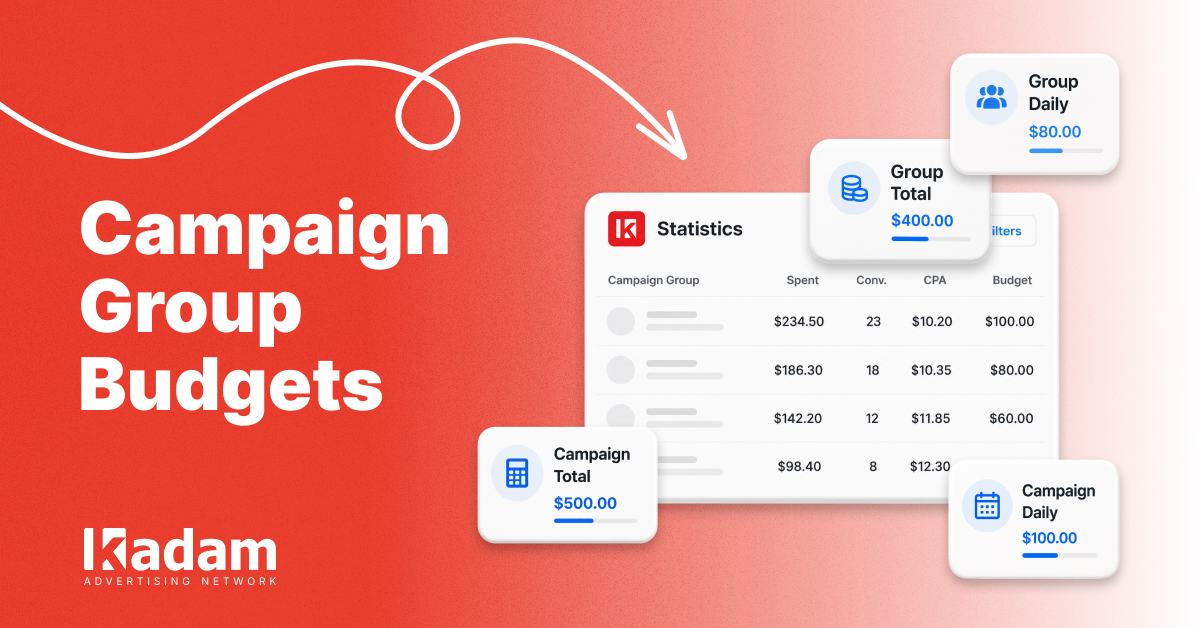
Campaign Group Budgets: Limits at a Glance
Retargeting Ads Explained: When and How to Bring Lost Customers Back