Buy Popunder Traffic: How to Choose Quality Sources
Learn how to buy popunder traffic, compare traffic sources, avoid low-quality inventory, and launch popunder advertising campaigns with better control over performance.
04 Jun 2026
For advertisers, media buyers, and affiliate marketers the call to buy popunder traffic usually lands on one practical thing, can this traffic generate conversions at a reasonable cost?
Popunder is not a new format, but it still has room in performance marketing. It brings fast launches, large volumes, and wide distribution across many GEOs and verticals. Meanwhile, not every traffic source is worth touching. Some sources look cheap at first, then vanish into lower conversion rates, weak user intent, and negative ROI.
If you want to run popunder traffic advertising right, the target is not only to purchase visits. The target is to buy traffic that you can track, filter, improve, and scale.
What Is Popunder Traffic?
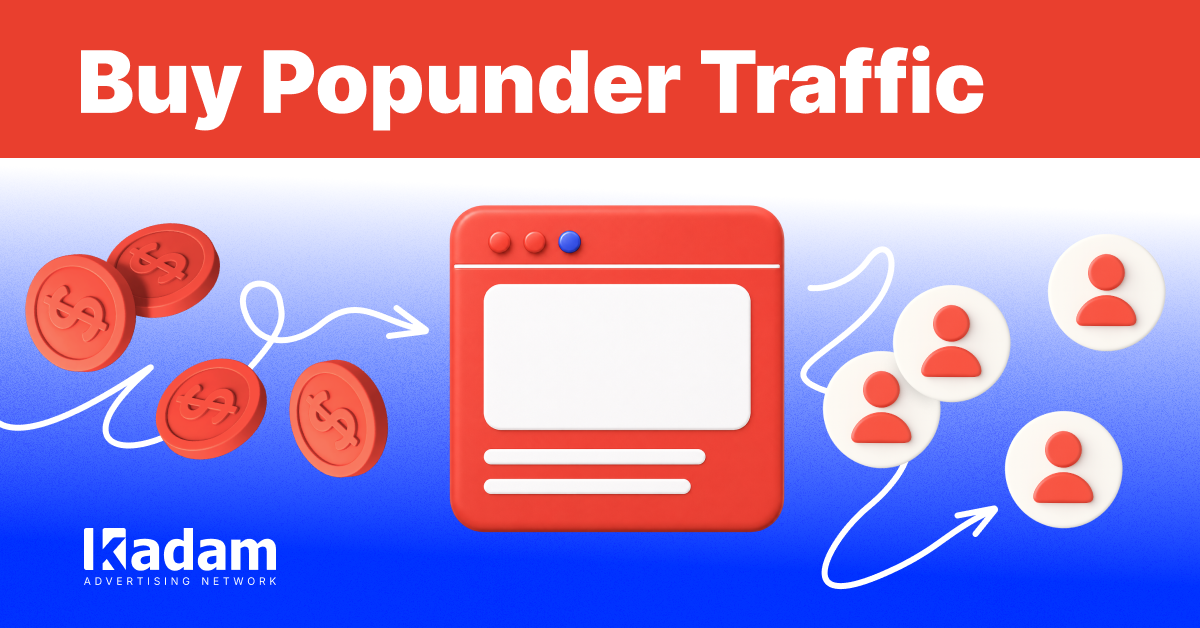
Popunder traffic is when people arrive at an advertiser’s landing page through popunder ads. A user goes to a publisher’s website. Then the advertiser’s page opens in a new browser window or tab, usually behind the main page.
Compared with a classic pop-up, which shows up in front of the page you are using, a popunder is less intrusive at the exact moment of browsing. The user might notice the advertiser’s landing page only after they close the original site or switch to something else.
For advertisers, this often translates to cold traffic. The user did not seek out the offer directly. They did not tap a banner with clear intent. Instead, the landing page becomes a separate advertising destination, so the value should be understood fast, before attention fades.
That is why popunder promotion works best when the funnel is plain, the message stays direct and easy to grasp, and tracking is configured correctly from the beginning.
Why Advertisers Buy Popunder Traffic
Advertisers buy popunder traffic simply for the huge volume the format can very quickly and all at once bring with it. It is often used by advertisers to test offers, scale the performance of their campaigns and reach out to audiences beyond expensive searches or social channels.
Popunder may also be suitable for affiliate marketers testing offers in iGaming, dating, sweepstakes, utility, app, lead generation, finance, ecommerce, and adult verticals. It performs excellently when the advertiser needs quick data across GEOs, devices and landing page variation. The dominant reasons why advertisers opt for the given format are the following:
- Swift campaign launch without the need for complex creative production;
- Huge traffic volume across several GEOs;
- Flexible testing of offers and landing pages;
- Compatibility with CPA, CPL, CPI, and other performance models;
- Great reach for affiliate campaigns and direct response funnels.
All the volume will be meaningless if it cannot be measured. A campaign with a thousand visits and zero conversions is not a traffic source. It is just an invoice.
Cheap Popunder Traffic vs Quality Popunder Traffic
The phrase cheap popunder traffic sounds attractive. Lower CPM or CPC, increased traffic, more testing. On paper, it seemed logical. In practice, cheap traffic can also be really expensive very quickly in case users do not convert.
Pursuing efficient pricing is fine. The problem is choosing a source based on price alone, without checking whether it actually converts. If you buy cheap popunder traffic from someone who hasn’t been checked, you may see high visit numbers without real performance. The campaign might attract bots, weak conversions, poor engagement, and traffic that cannot be optimised.
Quality popunder traffic should be judged by performance, not just price.
| Factor | Cheap traffic focus | Quality traffic focus |
| Main goal | Low cost per visit | Profitable conversions |
| Evaluation | Visits and CPM | CR, CPA, ROI, source data |
| Risk | Low engagement and poor filtering | Higher starting cost, better control |
| Optimisation | Often limited | Source, GEO, device, and campaign-level tuning |
| Best use | Small exploratory tests | Scalable performance campaigns |
Cheap traffic can be good for early testing, but if the source cannot be optimised, refined, or tracked correctly, it’s hard to build significant traction for a viable campaign.
What Makes Popunder Traffic High Quality?
The quality of traffic is not defined by one metric. It usually comes from trusted sources, relevant users, reliable performance, and enough transparency to improve campaigns based on real data.
A suitable popunder network, though, should offer traffic which is real, measurable, and segmentable. Advertisers need to see how many people have seen their ad, how many have visited their website, where those people came from, and which adverts are not popular. This helps them to see what works and stop wasting money on adverts that do not work. Some key drivers of quality:
- Real users instead of inflated or bot-heavy traffic;
- Relevant GEOs for the offer;
- Suitable devices and operating systems;
- Clean sources with consistent performance;
- Low bot traffic and basic anti-fraud protection;
- Stable conversion rates over multiple test periods;
- Transparent statistics;
- Source-level optimisation options.
The final point is often the most important of all. Not every budget can run profitably initially. Thus, buyers need the ability to pause weak sources, increase bids on good-performing segments, split mobile and desktop, test landing pages, and adjust targeting.
What to Check Before You Buy Popunder Traffic
Before you buy popunder traffic, check the network and campaign setup carefully. It’s better to do a few checks before launch to save money later. This useful checklist will help:
- GEO coverage: does the network have enough volume in your target regions?
- Targeting options: can you target by country, device, OS, browser, or source?
- Pricing model: CPM, CPC, or other options, and how bidding works.
- Traffic sources: is source-level reporting available?
- Anti-fraud tools: how does the network filter invalid or suspicious traffic?
- Postback tracking: can you send conversion data back for optimisation?
- Statistics: are visits, spend, conversions, and sources easy to analyze?
- Optimisation features: can you blacklist, whitelist, and adjust bids?
- Support: is there a manager who can help with setup and scaling?
- Payment flexibility: are deposits, minimums, and payment methods reasonable?
When buying popunder traffic advertising, the quality of your ads depends on how easy it is to access the data. If the network hides too much, you cannot make informed decisions.
Best Verticals for Buying Popunder Traffic
Popunder traffic is pretty usable across verticals, but few verticals are prevalent because they match quite well with the broad reach and cold-traffic type of popunder traffic format.
Best performing verticals are: iGaming, Dating, Sweepstake, Utility, App, Finance, E-Commerce, and Adult. Finally, these verticals usually work with the simple LPs, direct response flows, and offers that convert without extensive education.
However, there wouldn’t be one vertical that’s considered best universally; results are hinged on both offer, GEO, landing page, payouts model, competition, and quality popunder traffic. A dating offer performing well in one country may not guarantee success in another. An utility campaign might end up working well on mobile but not desktop; an iGaming funnel will probably need strong pre-landing content before sending users to the registration page.
How to Test Popunder Traffic Sources
Testing should be structured. Launching one campaign, watching the spend disappear, then calling the format bad isn’t much of a strategy. A straightforward test flow will look like:
- Select an offer and a clear conversion goal;
- Choose the GEO, device type, and operating system;
- Prepare one or more landing pages;
- Set up a tracker and postback;
- Define budget limitations in the first test;
- Display enough volume for data collection;
- Comparison between CR, CPA, ROI, and source performance;
- Pause weak sources and keep testing the stronger segments.
But then do not blend very many variables. By testing five GEOs, three devices, and four landing pages all at once on a small budget, the data becomes noisy. Start very tight, read the numbers, then expand.
Landing Page Tips for Popunder Traffic
The page should load quickly, especially on mobile devices. The headline should be clear. The message should be simple. The CTA should be easy to see without being hidden behind a long piece of text. Good landing pages for popunder traffic usually look like this:
- Fast loading speed;
- One main offer or action;
- Clear headline;
- Short and compact text;
- Strong CTA;
- Easy to read on mobiles;
- No non-business elements.
If a landing page has too many scripts, autoplay elements or unnecessary design blocks, users will leave before they can see the offer.
How to Track Popunder Campaign Performance
Key metrics usually include impressions, visits, clicks, conversions, CR, CPA, CPM or CPC, ROI, plus source performance, device performance, and GEO performance. If it is an affiliate campaign then postback tracking becomes especially important, because it helps the network or tracker link conversions with traffic sources, not only with clicks and views.
Source-level data is what matters most. A campaign can appear average at first glance, while only a few sources perform well and many others quietly burn budget. Without source reporting you can not separate that reality, so you keep optimizing with blind spots.
Tracking also helps you spot patterns you would not notice otherwise. Maybe Android traffic converts better than iOS. Maybe desktop visits are low priced but end up unprofitable. Maybe one GEO gives high CR, but the lead quality is weak. These differences are what decide if the campaign can expand, or if it will keep stalling at the same level.
Common Mistakes When Buying Popunder Traffic
The most common mistake is buying the cheapest traffic, and then expecting decent results. Low prices can be fine, but only when the traffic is genuine, measurable, and somehow aligned with what you sell.
Another bunch of errors usually shows up in practice too, like launching without a tracker or postback, mixing mobile and desktop inside one test, using the exact same landing page for every GEO, overlooking performance on the level of the source, and not pausing weak placements in time.
Advertisers also often forget to check offer suitability. Not every offer connects well with popunder. If the product needs extended education, strong confidence signals, or a few decision steps, a direct popunder landing page may just underperform. In that scenario, a pre-lander can help — it warms up the visitor before the main offer.
How to Choose a Popunder Ad Network
A solid popunder ad network should give more than just traffic. It also needs to give control. Evaluate a network by traffic quality, the real available volume, targeting options, anti-fraud measures, how clear the pricing is, the stats you get, optimisation tools, account support, and source-level reporting. The more control advertisers have, the easier it becomes to turn testing into measurable performance results.
Try not to pick a network just because it claims it offers the lowest prices. A better question is whether it can deliver traffic that fits your offer and also gives you enough data, so you can optimise.
Buy Popunder Traffic with Kadam
Kadam processes over 11 billion impressions every day. This means that advertisers have enough data to test, launch and grow popunder campaigns in lots of different locations without having to wait for inventory. You can target options like GEO, device, OS, browser, language, and placement. This means you can set up each test as narrowly or broadly as the offer requires. Retargeting tools also help bring back users who visited a page or interacted with a campaign but did not sign up the first time.
The quality of the traffic is controlled at the source. Kadam looks at traffic based on performance, not just how much there is, and its built-in anti-fraud, Kaminari, system helps to filter out any suspicious activity before it has a negative effect on the budget of the campaign. If your team needs more than a self-serve setup, Kadam’s team can help with campaign launch, creatives, analytics, and ongoing optimisation.
Popunder is just one of many formats you can use on the platform. Advertisers can also use push, in-page push, banner, native, and video ads, which makes it easier to manage acquisition, reach, and retargeting within the same account.
Conclusion
Buying popunder traffic can be a helpful approach for advertisers, media buyers, and affiliate marketers who want volume, quick trials, and performance campaigns that can scale. This format tends to perform best when traffic quality, tracking reliability, landing pages, and ongoing optimisation are handled with care.
The main rule is simple: don’t buy visits blindly. Buy information, test traffic sources, compare results, and optimise based on conversions, CPA, and ROI. A good campaign begins with a source you can measure and keep improving over time, even if it feels slow at first.
FAQ
What is popunder traffic?
Popunder traffic is traffic sent to an advertiser’s landing page through popunder ads, where the page opens in a separate browser tab or window, sometimes after a user closes or ignores the first view.
How can I buy popunder traffic?
You can buy popunder traffic through a popunder ad network. Create a campaign, set targeting, decide on a bid or budget, then route the visitors to your landing page.
Is cheap popunder traffic worth it?
Cheap popunder traffic can be useful for small experiments but it should be evaluated by conversions, CPA, ROI, and overall traffic quality, not only by low cost.
How do I check popunder traffic quality?
Use tracking, postback data, source reports, plus conversion rates. Also check CPA and ROI, device performance, GEO performance and what users do after the visit. If behavior is weak, the traffic is usually weak.
What verticals work best with popunder traffic?
iGaming, dating, sweepstakes, utilities, apps, finance, eCommerce, and adult are often tested with popunder campaigns.
Do I really need a tracker for popunder campaigns?
Yes. A tracker helps measure sources, conversions, devices, GEOs, expenses, and return on investment. Without proper tracking, optimization becomes mostly guess work, and you end up staring at random signals that do not help much.





Read Also
More Precise Adult Targeting: 40+ Subcategories in Kadam
DarkSword Reached Ad Traffic: Why a Normal Landing Page Can Hide an iOS Attack
Direct Advertiser vs Ad Network Which Model Is Better
Managing CPC Campaigns with Auto Rules
VAST Creatives Are Now Available in Kadam Video Campaigns
What Is Retargeting Advertising and How Does It Work
New Ways to Add HTML Creatives
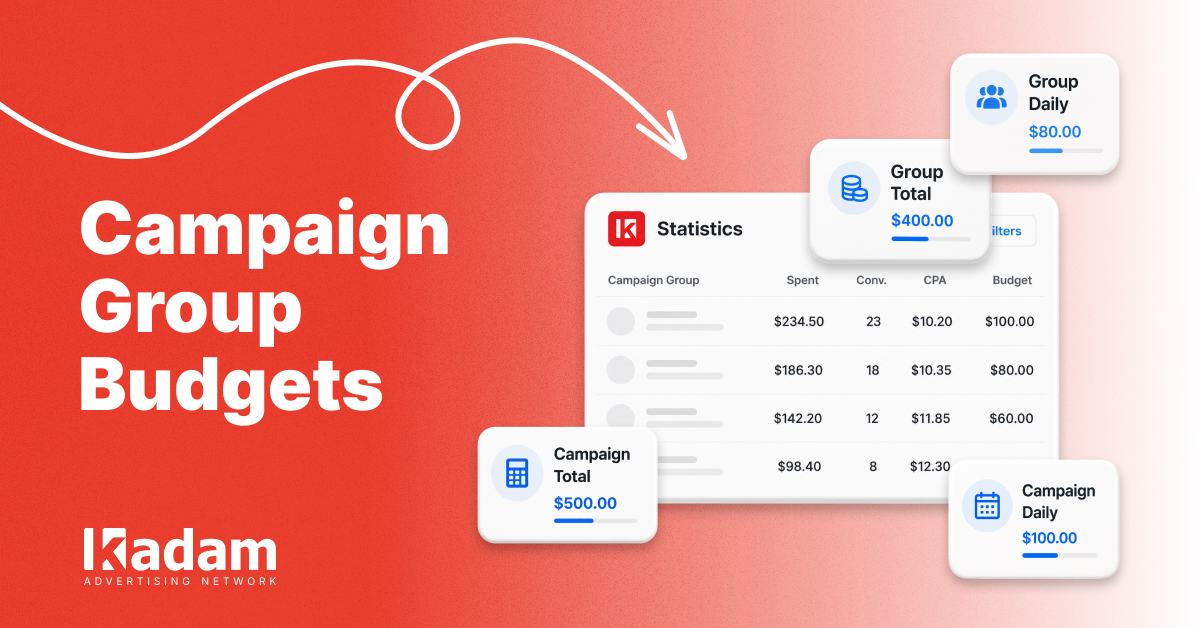
Campaign Group Budgets: Limits at a Glance
Retargeting Ads Explained: When and How to Bring Lost Customers Back