Online Advertising Formats: How to Choose the Right Channel
Explore online advertising formats and learn how to choose the right channel for performance campaigns, traffic acquisition, and conversion optimisation.
22 Jul 2026
Different online advertising formats do different jobs. Some are made for quick reach and fast testing. Others work better when the user needs more details before taking action. Some formats are good for brand awareness, and others feel stronger for direct response, lead generation, app installs, user reactivation, or retargeting.
The challenge is that there is no one single format that works best for every campaign. A popunder can create volume quickly, but it still needs a solid landing page. A push ad can send a brief message fast, however, it has limited space for elaboration. Native ads can warm up the audience using relevant content, but they require more preparation. Display placements can keep a brand in front of people consistently, but they demand clean visuals and carefully controlled frequency.
The right decision depends on the offer, vertical, GEO, audience habits, budget, funnel stage, and the creatives on hand.
What Are Online Advertising Formats
Online advertising formats are basically the different methods that deliver ads to users across digital spaces. They shape how the message appears, how creative assets should be prepared, how users engage with the ad, and what campaign outcomes can be reasonably expected.
A format might show up as a push notification, a popunder tab, a native placement, a banner, a search ad, a social media placement, a video ad, or some other digital channel. Each of them builds a slightly different user experience, as people see it in a different mood or moment.
The format also affects cost and how a campaign is built. Some channels are bought by impressions, others by clicks or actions. Some ask for a short title along with an icon. Others need a complete landing page, a content angle, a video asset, or even a banner set.
Why Choosing the Right Advertising Channel Matters
When the format does not fit the audience or the funnel stage, traffic quality may drop, conversion rate can fall, and cost per acquisition may end up going higher.
For instance, an offer that needs trust and explanation might run into trouble if it is pushed through a layout with very limited message space. A straightforward app install offer may not need a long native pre-lander. Meanwhile, a retargeting campaign can perform better via direct reminders than through wide awareness placements.
The channel also affects optimisation. Push campaigns often lean on message testing and audience segments. Popunder campaigns depend heavily on landing pages, traffic sources, and the frequency itself. Native campaigns require experimenting with headlines, images, and the content flow. Display campaigns need visual testing, placement control, and frequency management, all at once. That is why advertisers should not pick online advertising formats only because of low traffic cost.
Main Types of Online Advertising Formats
There are plenty of digital advertising channels but a few formats are especially common in performance marketing.
Push Ads
Push ads are notification-style adverts that show up in a browser or a device environment. They typically include a title, a short message, an icon or an image and a call to action, sometimes it’s very visible.
Push works best when the message is simple, and the user understands the next step quickly. It can help with promotions, alerts, app campaigns, limited-time deals, audience reactivation and also retargeting campaigns.
The advantages are speed, direct contact and easy testing. Advertisers can compare different messages, icons, GEOs and segments. The limitation is space:, if the offer needs more than a quick explanation, the landing page has to do the heavy lifting and finish the story.
Popunder Ads
Popunder ads open an advertiser’s landing page in a separate browser tab or window, usually after a user clicks or otherwise interacts with a website. This layout gets used when advertisers need a quick launch speed, a high traffic volume, and direct checks of a landing page.
Popunder can work well for affiliate campaigns, iGaming, dating, apps, utilities, sweepstakes, adult, entertainment, and other direct-response verticals. Because the visitor often comes in with lower intent, the landing page matters a lot. It should load fast, explain the offer in plain terms, and steer the person toward the next step.
Native Ads
Native advertising is meant to sit more naturally beside the surrounding content. It might resemble a suggested article, a sponsored post, a content card, or an in-feed placement.
Native ads work well when users need a bit more context before they convert. It’s often used in finance, health, e-commerce, education, subscriptions, investment-style offers, and other funnel paths where trust matters. Sometimes, the whole thing feels more persuasive because the content fits the surrounding environment, not just a hard sales pitch.
The format really depends on strong headlines, relevant visuals, and one clear content angle. Also, a native campaign may need a pre-landing page that lays out the offer before the person even lands on the final conversion page.
Display Ads
Display advertising uses banners and visual placements across websites, apps, and different media spaces. It tends to show up for brand awareness, retargeting, product reminders, and multi-touch campaigns that guide someone over time.
Display ads rely on visual clarity a lot. A user might only glance at the banner, so the message should be plain and easy to catch quickly. Strong display campaigns usually run tests on banner sizes, visual style, placements, frequency, and the audience segment. Display might not always lead to the final click directly, but it often helps the product stay present during a longer decision process.
How to Choose the Right Advertising Channel for a Campaign
The best channel depends on what the campaign needs to achieve. If the goal is quick traffic and landing page testing, popunder may be a good fit. If the advertiser needs a direct reminder or reactivation message, push may perform better. If the offer needs education, native placements can be helpful. If the aim is exposure, or retargeting reinforcement, display ads can matter a lot. Advertisers should also weigh:
- Target audience;
- GEO;
- Budget;
- Vertical;
- Funnel stage;
- Available creatives;
- Landing page quality;
- Tracking setup;
- Expected conversion path.
A format should fit both the user and the offer. If the funnel is complex, the format must leave enough space for explanation. If the action is simple, a faster, more direct channel may be enough.
Advertising Formats for Different Marketing Goals
Different online advertising formats support different campaign aims.
| Marketing goal | Suitable formats | Why they fit |
| Brand awareness | Display, video, social media, native | Strong visual reach and repeated exposure |
| Lead generation | Search, native, push, social media | Can match user intent or offer clarity |
| Sales | Search, native, display retargeting, social media | Supports product comparison and conversion |
| App installs | Push, popunder, social media, video | Works for direct action and mobile users |
| User reactivation | Push, display, popunder, native | Brings previous users back into the funnel |
| Performance marketing | Popunder, push, native, search | Easier to test and measure by results |
One single ad format almost never covers the whole journey, so most teams end up mixing things. It can be that a channel is used for discovery, another is used for retargeting, and a third one helps with the final conversion.
Choosing an Advertising Format by Industry and Vertical
The vertical really does matter because the way people behave changes across sectors. For iGaming, popunder, push, native, and display can all play a role depending on where the user sits in the funnel.
For dating campaigns, push and popunder often perform well, because the message can be straight and the path to conversion usually stays short.
For finance and e-commerce, there is often a need for more context. Native, search, social media, and display retargeting may work better once users compare alternatives or want evidence before they commit.
For apps and utilities, push, popunder, social media, and video are common because people can grasp the value quickly then take action on mobile.
There is no fixed rule. The same format can behave differently by GEO, device, audience source, and landing page quality. Campaign performance can fluctuate from week to week, even when the setup, targeting, creatives, and landing page appear unchanged.
Cost Models in Online Advertising CPC, CPM, and CPA
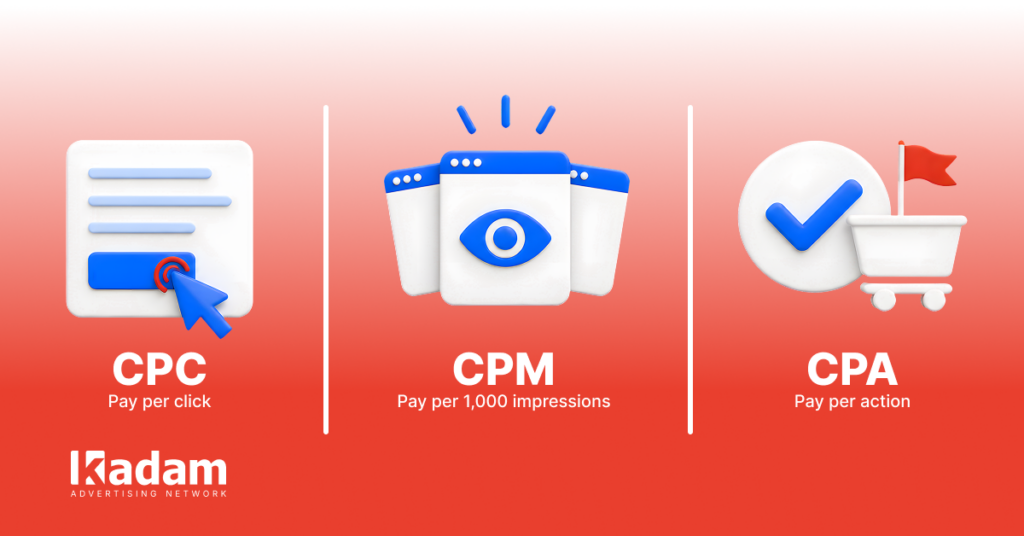
Advertising formats are often sold through different pricing arrangements. The most used are CPC, CPM, and CPA.
CPC stands for cost per click. In that setup the advertiser pays when a user clicks. CPM means cost per thousand impressions, and the advertiser pays for visibility. CPA is cost per action: here the advertiser pays when a defined outcome occurs, like registration, purchase, deposit, or install.
None of these models is automatically the best. A low CPC can still be costly if clicks do not turn into conversions. A high CPM can still work well when the landing page performs strongly. CPA can feel safer, but it often comes with tighter requirements and less control over the incoming traffic.
Creative Requirements for Different Advertising Channels
Each ad type needs its own creative components. It cannot be the same asset every time, because the user behaves differently.
For push you need a short message, a clear title, an icon or image, plus a direct call to action. The point is speed, it should communicate the value quickly, even on a small screen. Make the hook tight, the wording simple.
For popunder you need a strong landing page. The user typically comes in without tapping through a detailed ad, so the first screen has to explain the offer fast. The top section of the page should answer the user’s main question immediately. It should make the offer, key benefit, or next step clear without forcing the user to scroll through unrelated text first.
Native usually needs multiple things, like headlines, visuals, storytelling, and sometimes a content-oriented pre-lander. The ad has to feel related to what surrounds it, not like a sudden interruption, because that causes distrust.
For display you want banners or visual creatives that are easy to spot and recognisable. Keep the layout clean, and make sure it is still readable when attention is limited. The message should work even when someone glances.
How to Test Different Advertising Formats
Testing should be a bit structured. Advertisers should not just launch every format, GEO, creative, and landing page at once. A practical test process often looks like this:
- Choose one offer and define the campaign goal.
- Select one or two formats that fit the funnel.
- Prepare format-specific creatives and landing pages.
- Use tracking links, postback, and campaign labels.
- Split budget clearly by format.
- Measure clicks, impressions, conversions, CPA, ROI, and quality.
- Pause weak segments and scale stronger ones.
When testing stays clean the results become easier to understand. If every format is measured under different conditions, then the comparison becomes unreliable, and advertisers may misread which format actually worked.
Common Mistakes When Choosing Advertising Channels
One common mistake is selecting a channel only because the traffic is cheap. A low price does not guarantee real performance.
Another mistake is using the wrong format for the audience. A complex product may need native or search, rather than a short push message. A simple offer may not require a long content funnel at all.
Bad tracking is also a big issue. Without correct data, advertisers cannot compare channels equitably, or optimise campaigns in a proper way.
Some advertisers adjust too many things at once. When the offer, GEO, creative, landing page, and format change together, it becomes hard to understand what actually caused the outcome.
How Advertisers Use Kadam for Online Advertising Campaigns
Kadam gives advertisers access to multiple ad formats in one place, like popunder, push, in-page push, banner, native, and video. This helps performance teams test different channels, contrast results, and handle acquisition, reach, and retargeting inside the same account.
The platform processes over 11 billion impressions a day, which gives advertisers enough volume to test, launch and scale campaigns across multiple GEOs without waiting on limited inventory. Targeting includes GEO, device, operating system, browser, language, so each test can be scoped narrowly or broadly, depending on the offer and campaign goal.
Kadam also provides retargeting tools for bringing back visitors who interacted with a page, or a campaign but did not convert the first time. Traffic quality is checked at the source: Kadam filters by performance, not only volume, while its built-in anti-fraud Kaminari click system helps screen suspicious activity, before it affects campaign budgets.
For teams that want a bit more help than a self-serve setup, Kadam can jump in for campaign launch, creative development, analytics, and ongoing optimisation. For advertisers who want to compare multiple formats through structured performance testing, Kadam also brings traffic volume, tighter targeting controls, day-to-day campaign management tools, analytics reporting, and human support.
Conclusion
Choosing the right advertising channel depends on business goals, audience fit, budget, vertical, funnel stage, and the advertiser’s testing strategy. There is no single format that always performs for every campaign.
Many successful advertisers blend several online advertising formats together. One format can build awareness while another nudges people back again, and a different approach pushes toward conversion. The best outcomes usually show up when you test properly, measure consistently, and optimise each channel using real performance data.
FAQ
What Are the Most Popular Online Advertising Formats?
The most popular online advertising formats include push ads, popunder ads, native ads, display ads, search ads, social media ads, video ads, and in-page push.
Which Advertising Format Is Best for Performance Marketing?
There is no universal best format. The right choice depends on the offer, GEO, audience, funnel stage, budget, and campaign goals. Push, popunder, native, and search are ad channels often used in performance campaigns because they can be tested, tracked, and compared against specific campaign goals.
Are Popunder Ads Effective for Online Advertising?
Yes, popunder ads can be effective when advertisers need traffic volume, rapid testing, and a clean landing page funnel. The outcome depends on GEO, traffic quality, landing page speed, targeting, and ongoing optimisation.
How Do Advertisers Choose Between CPC, CPM, and CPA Models?
Advertisers pick the payment approach based on campaign objectives along with the main performance markers. CPC tends to fit click-focused testing, CPM is used for visibility and ad impressions, while CPA pays for specific defined outcomes.
Can Advertisers Use Multiple Advertising Formats Together?
Yes, advertisers can mix formats to expand campaign coverage. Display may help with recognition, native may describe the offer, push can act as reminders, and popunder can bring people back to the landing page.
How Should Advertisers Compare Different Channels?
Advertisers should measure channels using uniform tracking, comparable conditions during tests, and straightforward metrics. Examples include



Read Also
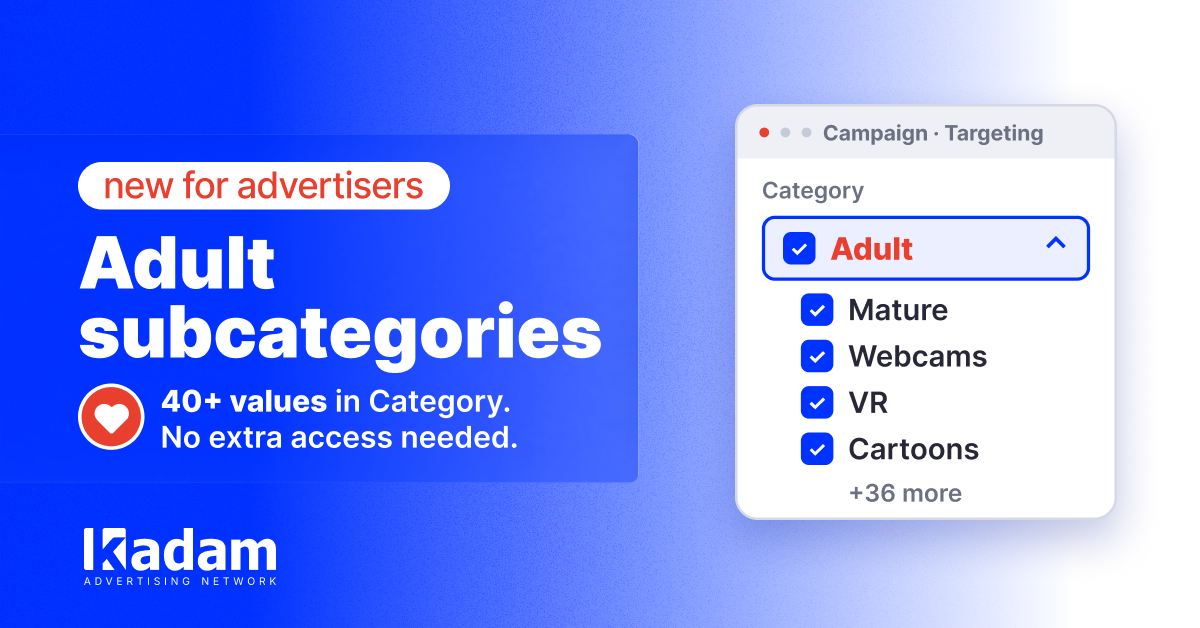
More Precise Adult Targeting: 40+ Subcategories in Kadam
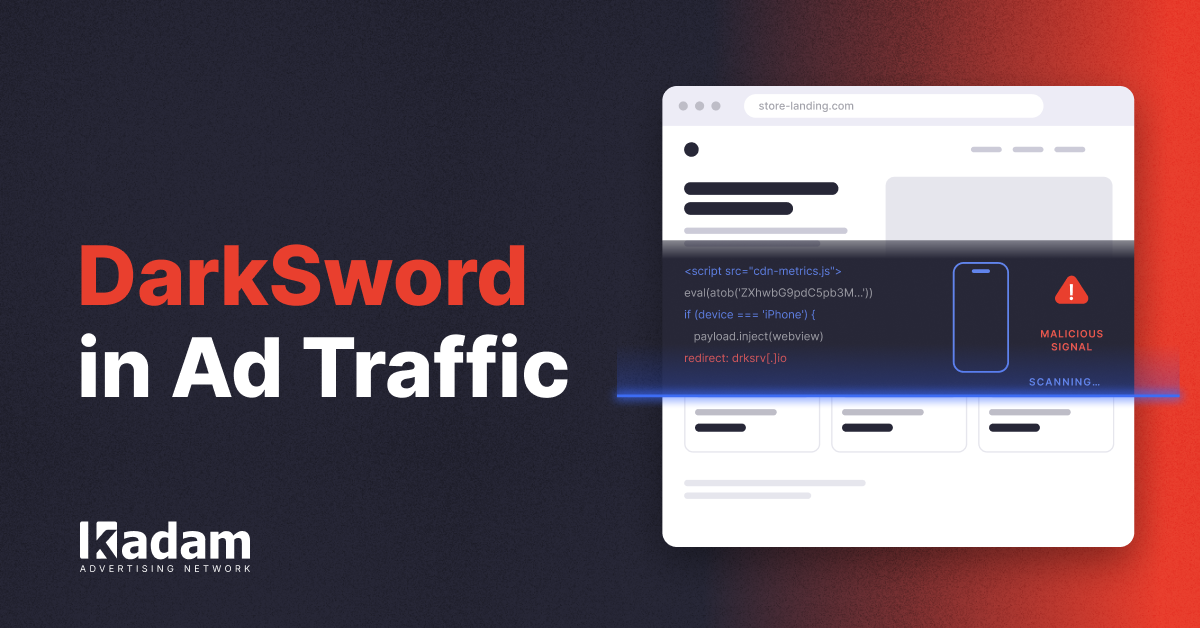
DarkSword Reached Ad Traffic: Why a Normal Landing Page Can Hide an iOS Attack
Direct Advertiser vs Ad Network Which Model Is Better
Managing CPC Campaigns with Auto Rules
VAST Creatives Are Now Available in Kadam Video Campaigns
What Is Retargeting Advertising and How Does It Work
New Ways to Add HTML Creatives
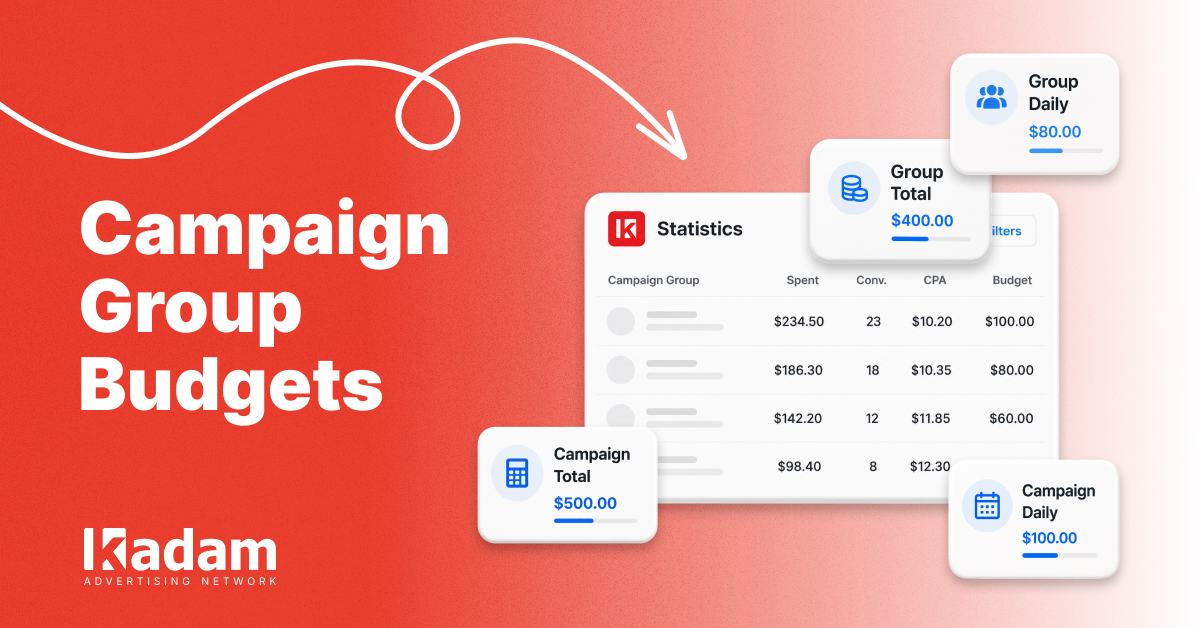
Campaign Group Budgets: Limits at a Glance
Retargeting Ads Explained: When and How to Bring Lost Customers Back