Frequency Capping: Full Guide to Increase Popunder Revenue
Learn how frequency capping helps publishers increase popunder revenue, control impressions, protect user experience, and build sustainable website monetisation.
12 Jun 2026
For publishers using popunder ads, the obvious goal is simple: make more money from the traffic they already have. But having more adverts is not always the same as making more money. If users see too many popunders, they may leave the site quickly, return less often, or start using ad blockers.
Publishers want to increase popunder revenue without damaging user experience or reducing the long-term value of their website traffic. The goal is to limit how often the same user sees a popunder ad. This means that the website can preserve website quality, return visits, and better monetisation over a longer period of time.
Popunder frequency capping helps publishers control how often one user sees popunder ads during a session, day, or another selected period. This helps protect traffic quality, return visits, and monetisation over time.
What Is Frequency Capping?
In simple terms, the cap controls how many times one user will look at an advertisement in a specific period. It may range from one session, 1 hour, 1 day, or may be set to another duration.
For example, one popunder could be allowed per user, on a per day basis, while a different site may allow a popunder per sequence. Two impressions in 24 hours might be allowed on another site based on audience, GEOs, and monetisation goals. Frequency capping is simply answering the question how much is too much?
This is especially critical with popunder ads because the format entails opening a landing page on a different tab or window. It can be effective, but also quite noticeable. If it becomes visible very often to users, then the format might become intrusive.
Why Frequency Capping Matters for Popunder Ads
Popunder ads can generate good revenue, especially for websites that get a lot of visitors who are likely to be interested in the ad. But the format needs to be controlled.
When popunders appear too often, users may leave the site faster, spend less time on it, install ad blockers, or start viewing the website negatively.
This is the main issue. Popunder monetisation is not just about how many adverts there are. It is about how much money the website can make while keeping users interested enough to come back. Frequency capping also counts because it guards:
- User experience;
- Session duration;
- Return visits;
- Traffic quality;
- Advertiser performance;
- Long-term monetisation stability.
It’s generally not a good idea to make it too hard for people to use a website because this can actually reduce the amount of money the website makes.
How Frequency Capping Can Increase Popunder Revenue
Frequency capping sounds a bit odd as a way to increase income. At first, it may seem that fewer ad impressions mean less income. In practice, the relationship is not always that simple.
The clearer line of thought is instead like that: less irritation leaves room for more return visits. More return visits develop into higher consistently stable traffic. And that traffic also tends to work better for advertisers, that means, with better traffic quality, more robust demand may be expected. All such conditions benefit the popunder revenue.
This way, publishers can boost popunder revenues with frequency capping – not by bothering every possible user with every impression, but by keeping the audience interested.
For example, if a session is limited to five popunders, a publisher might make a bit more money right away. But if the user doesn’t return, it could have a negative effect on future sessions, impressions, and revenues. Limiting how often users can access content helps publishers plan for the future.
Frequency Capping and User Experience
When popunders are shown too frequently, bounce rate can rise. Session duration can frequently decrease. Returning users may thus preferably become fewer. It also makes the website appear as if it can no longer be trusted easily. Once you have lost this trust, it is most difficult to try to rebuild it again.
This is why increasing popunder revenue with frequency capping should be understood as a quality strategy, not only a technical setting. Publishers are not only managing ad delivery. They are also managing how visitors experience the site.
A balanced setup gives users enough space to browse the website while still allowing popunder ads to generate revenue. The popunder may appear, but not so often that it dominates the visit. The perfect popunder frequency could be considered ideal for websites in the content, entertainment, tools, utilities, file-sharing and streaming sectors that require repeat visitors. Most of these types of websites depend on people visiting them again.
Frequency Capping and Popunder Impressions
Frequency capping can reduce total popunder impressions. That part is obvious. If each user sees fewer popunders, the impression count may go down. But impressions alone do not tell the full story.
A small reduction in impressions may lead to more return visits and better traffic quality over time. And this is where the question of how to increase popunder revenues and impressions becomes more complex.
Sometimes, it’s not easy for publishers to make both of these things happen at the same time. Sometimes the best thing to do first is to make sure your website looks its best, and then work on getting more people to visit your site. A publisher should be able to compare how different caps work for a figure of impressions as well as by overall monetisation health.
| Metric | Why it matters |
| Popunder impressions | Shows how many ad views are delivered |
| Popunder revenue | Shows actual earnings from the format |
| CPM | Helps compare revenue efficiency |
| Bounce rate | Shows whether users leave too quickly |
| Session duration | Indicates whether users still engage with the site |
| Returning users | Shows long-term audience health |
| GEO and device results | Helps find segment-specific performance |
A good cap may not maximise impressions. It should maximise sustainable value.
How to Set Frequency Caps for Popunder Ads
For content sites, adult websites, streaming-related platforms, tools, utilities, and download pages, this balance is especially important. Start by moderation, like one popunder per user per session or one to two popunders per user per day. Test from there.
That process can be quite easy:
- Set base frequency capping;
- Examine long enough to figure steady numbers;
- Then test a much lesser or looser cap under similar conditions;
- Compare revenue with impressions and CPM with the bounce rate and returning users;
- Analyse the result over GEO, device, traffic sources, and user type;
- Select that point where one may get the finest result between revenue and UX.
Returning users may need stricter frequency caps if higher ad exposure starts reducing repeat visits. This could make it harder to make money.
Frequency Capping by GEO, Device, and Traffic Source
The same cap does not always work across all segments. People use the internet in different ways, depending on where they are in the world, what device they’re using, and what they’re doing online.
Mobile users probably behave differently from desktop ones; users in some GEOs may respond negatively to frequent ad exposure, while others experience increased bounce rate behaviour. Organic visitors probably do have different behaviour from, say, referral, social, or paid traffic. A returning user may deserve less exposure than a new user.
For example, caps might be tighter for mobile users, since frequent interruptions during a session tend to reduce engagement more sharply on mobile. Some might have different regulations in place for particular GEOs to protect high-value traffic while still monetising available impressions. Still others may observe restrictions for return users but are more flexible with first-time users.
How to Test Frequency Capping Settings
The steps are to set a baseline cap, identify the current performance level, and change one factor at a time. If the publisher kept changing frequency caps, GEO targeting, ad categories, and layout all at once, it would get difficult to find what had triggered the result.
A clean test should compare:
- Total popunder revenue;
- Popunder impressions;
- CPM;
- Bounce rate;
- Session duration;
- Returning users;
- Revenue by GEO;
- Revenue by device;
- Performance by traffic source.
This test is too short to pick up regular traffic cycles. One traffic incident is not enough to make any decision. Weekdays and weekends behave differently. Also, some GEOs change over time. A publisher should not judge its first 24 hours, unless the website has a very high traffic volume. More data lead to better decisions.
Frequency Capping Mistakes
Frequency capping is simple, but publishers still make common errors.The first problem is showing popunders too often. When users see the same ad on nearly every visit, they tend to disengage faster, install ad blockers, or stop returning altogether — the opposite of what frequency capping is meant to protect.
The second mistake is setting one and the same cap for all segments. On mobile, desktop, GEOs, traffic sources, new users, and returning users will have different treatments.
The third mistake is watching only impressions. As more impressions are not necessarily greater website monetisation, if user quality decreases, advertiser performance might also drop.
Other mistakes include ignoring UX metrics, changing settings too often, testing without enough data, and comparing revenue without considering retention.
Frequency capping is a limit, of course. But it should be used as a revenue management tool, not as a random restriction.
Frequency Capping and Long-Term Website Monetisation
To make money from sites in the long term, publishers need to have a good audience. A publisher can force more ads today, but if users stop returning, future revenue becomes weaker.
Frequency capping supports sustainable website monetisation by helping publishers protect the relationship between the site and its visitors. It reduces session overload and helps preserve traffic quality, which supports more stable revenue over time.
Sites like tools, utilities, entertainment platforms, content repositories, and download pages depend heavily on repeat visits. If you stop using it, you might lose more than a few extra impressions.
To increase popunder revenues with frequency capping, publishers should think beyond immediate ad delivery. The real goal is to create a monetisation setup that keeps working month after month.
How Kadam Helps Publishers Manage Popunder Monetisation
Kadam is a useful tool for publishers who want to add popunder ads to the ways they make money. The network processes 8–11 billion impressions a day, with over 80,000 advertisers trying to get people to visit their websites. This helps to make sure that the number of orders is always high (around 99% of orders are filled) and that demand is consistent across many different regions.
The actual eCPM still depends on the quality of the traffic, the niche, the geographical location, the mix of devices used, and the user behaviour. But publishers get real-time reporting, which makes it easier to see how popunder performance compares with total revenue and other ways of making money.
Kaminari, Kadam’s multi-layer anti-fraud system, protects traffic quality by filtering out invalid and bot traffic before it affects payouts. The onboarding process is also fast: most publishers can start making money in a few steps, and a dedicated account manager and 24/7 support are available for help with delivery settings and optimisation.
For publishers, the most important thing is control. Kadam gives website owners the tools to test popunder ads, monitor results, adjust delivery, and manage monetisation without losing sight of user experience.
Conclusion
Frequency capping is a strategy by which the publisher can balance between and among revenues from impressions and user experiences. The truth is, it just means making sure that advertising on the site can be paid for. It’s not about lowering the amount of money made.
Publishers can use frequency capping to boost popunder revenue without overexposing users to ads. By limiting how often the same visitor sees a popunder, publishers protect traffic quality and encourage repeat visits. The trade-off is usually short-term: fewer impressions today, but a more valuable, more loyal audience over time.
FAQ
Why is frequency capping important for popunder ads?
Frequency capping is important because it limits how often one user sees popunder ads. This helps protect user experience, reduce irritation and support long-term revenue.
Can frequency capping increase popunder revenue?
Yes, it can. By cutting down excessive ad exposure, publishers may improve repeat visits, traffic quality, and long-term popunder revenue.
Does frequency capping reduce impressions?
It can reduce popunder impressions in the short term. But better user retention and higher traffic quality may support stronger monetisation over time.
How many popunder ads should a user see per day?
There is no universal number really. Many publishers kick off with one or two popunders per user per day, then they test and retest based on GEO, device, niche, and how people behave.
How can publishers test frequency capping?
They can test by starting with a baseline cap, then swapping one setting at a time, while comparing the revenue, impression count, CPM, bounce rate, session duration, and the share of returning users.
Is frequency capping useful for website monetisation?
Yes. Frequency capping supports website monetisation, because it helps publishers monetise the incoming traffic while keeping the site usable, and it also shields the long term audience value.





Read Also
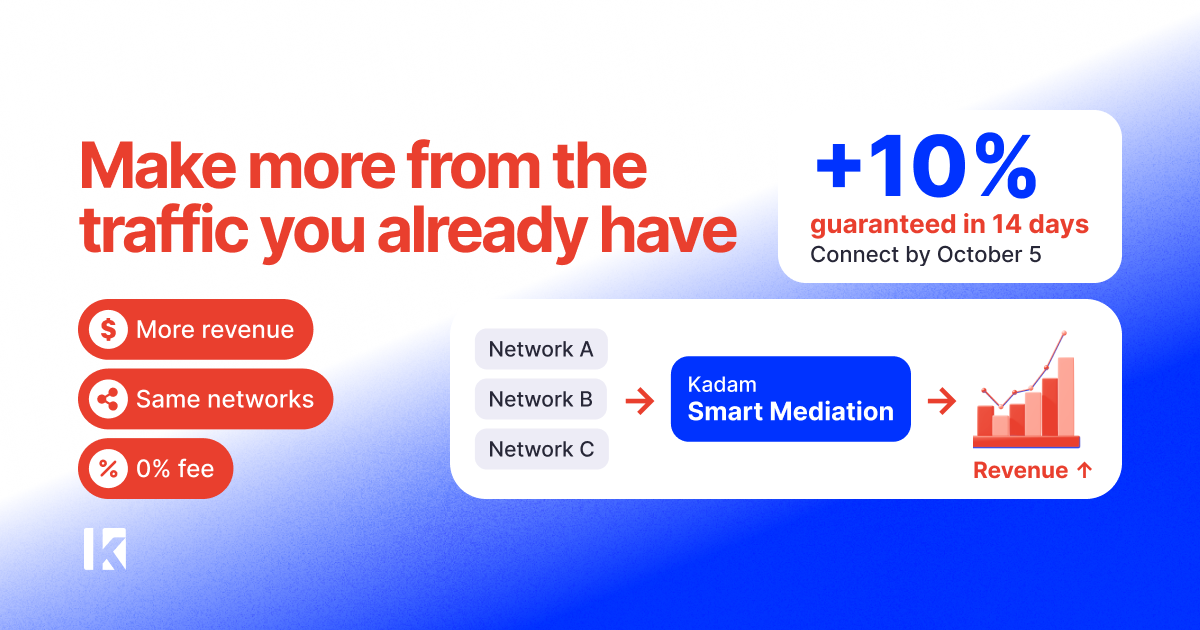
More Revenue from Existing Traffic: How Kadam Smart Mediation Works
Adult Website Monetization: Best Ways to Earn from Adult Traffic
How Ad Network Platforms Connect Advertisers and Publishers
KAI for Publishers: Get Answers About Statistics and Monetization in Seconds
VAST Video Ads: A New Monetization Format Is Now Available in Kadam
Push Notifications: Easily Migrate Your Subscriber Base and Connect Multiple Providers on One Domain
Popunder CPM for Publishers: What Affects Website Revenue
Popunder Ads for Publishers: How Website Owners Earn from Pop Traffic
How to Monetize a Website Without Google AdSense