Popunder Ads for Publishers: How Website Owners Earn from Pop Traffic
Learn how popunder ads help publishers monetize pop traffic, lift advertising revenue, and connect with popunder ad networks while keeping user experience under control.
01 Jun 2026
For many site owners, display banners and native placements are not always enough to fully monetize their traffic. Some visitors ignore the banners, some ad slots are already filled, and some websites need an extra money stream that does not require a complete rebuild of the monetization setup.
A popunder ads publisher can earn from traffic by letting an ad network show popunder ads to visitors, commonly using impressions, GEO, device type, and advertiser demand as inputs.
When used carefully, popunders can back up website monetization and lift total ad revenue. When used badly, they can annoy people and also lower long term traffic quality. The real difference comes down to the setup, how often they show, and who is behind the ad delivery.
What Are Popunder Ads for Publishers?
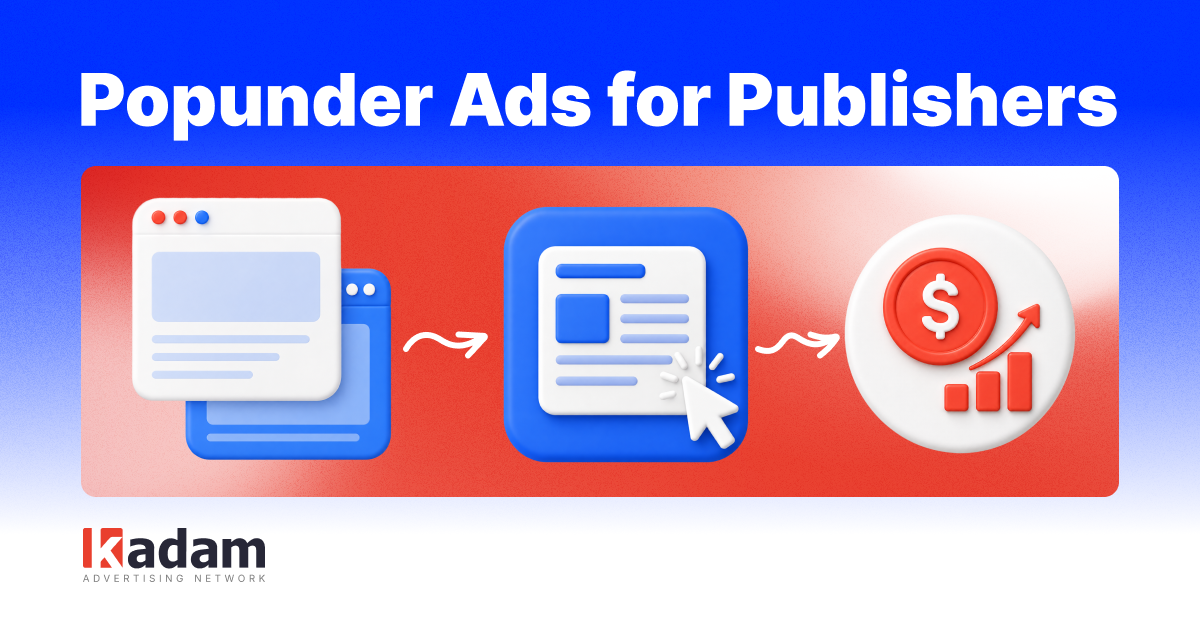
Popunder ads are an online advertising type that opens in a new browser window or tab behind the current page. Unlike pop-up ads, which show up in front of the user and interrupt the session, popunders typically remain in the background until the user closes the tab, or switches away from the main page.
For publishers the mechanics are simple enough. A website adds a script or tag from a publisher ad network, and when a visitor opens or interacts with the site the network may trigger a popunder ad, based on the publisher’s settings, campaign availability, and targeting rules.
The user keeps browsing on the original page, meanwhile the advertiser gets exposure in a separate window or tab. The publisher earns money from the delivered impression, click, or another pricing approach depending on the network and campaign format.
In practice, popunders are often used as an extra step for traffic monetization. They do not replace banners, direct deals, push subscriptions, or native ads. They sit beside them, creating extra value from visits that might otherwise bring little, or basically no revenue.
How Publishers Earn Money with Popunder Ads
The basic earning model is pretty straightforward:
- A website receives visitors;
- The ad network detects available ad demand for that traffic;
- A popunder ad is shown according to the publisher’s settings;
- The advertiser pays for the traffic or impression;
- The publisher receives revenue through the ad network.
Many popunder campaigns run on a CPM model, meaning publishers are paid for every thousand valid ad impressions. So CPM revenue is one of the core ideas in popunder monetization. In general the more qualified impressions a publisher can deliver, the higher the earning potential for the website might be.
A smaller site with high quality traffic from strong GEOs may outperform a bigger site that brings low quality or heavily recycled visitors. Advertisers care about conversions, not just exposure. When traffic does not perform, demand usually falls.
So a popunder ads publisher should look past raw impressions. Session quality, device mix, traffic sources, user behavior, and frequency settings all impact long term popunder revenue.
Why Publishers Use Popunder Ads
Publishers use popunder ads because this kind of format can monetize traffic that some other ad formats might miss. It works especially well for websites that have high visitor volume, limited premium display space, or audiences that do not do much interaction with standard banners.
The main advantages include:
- Additional revenue lane. Popunders can run beside other ad types and lift total ad earnings;
- Wide reach. The format is able to produce huge impression numbers when there is traffic coming in;
- Straightforward setup. Most ad networks offer a script or tag you can drop in without much complicated technical work;
- Works with other ad formats too. Popunders can pair with banner ads, native ads, push ads, or even direct campaigns;
- Flexible delivery controls. Options like frequency capping, GEO targeting, and category filters let publishers steer where and how ads are served.
Publishers can earn from visits without piling more obvious ad blocks into the page layout. For content-heavy or utility-driven sites, that matters.
Still, popunders are not a set and forget kind of thing. They call for monitoring. If the frequency gets too pushy, or the ad quality ends up weak, you may see quick money but also lose user trust in the process.
What Types of Websites Can Use Popunder Ads?
A high-end corporate blog, or a SaaS product landing page, probably won’t want this format at all. Yet for many high traffic websites, popunders can be a practical ingredient in website monetization. Common website types include:
| Website type | Why popunders may fit |
| Entertainment sites | High visit volume and broad advertiser demand |
| Streaming-related sites | Frequent sessions and strong traffic flow |
| File sharing platforms | Utility-based visits with monetization potential |
| Adult websites | Established demand for popunder traffic |
| Content sites | Extra revenue layer beyond banners |
| Tools and utilities | Repeat usage and simple monetization setup |
| Download pages | High-intent user actions and measurable traffic |
This does not mean every site in these categories will earn well. It means the format is often used there. Real performance depends on GEO, audience quality, advertiser demand, user behavior, and network settings, too.
What Affects Popunder Revenue for Publishers?
Popunder revenue relies on more than just traffic volume. Two publishers can deliver the same number of impressions and still get very different results.
The biggest factors are usually GEO, the device type, niche, advertiser demand, and frequency capping. Traffic from countries with stronger advertiser competition often ends up with higher CPM rates. Mobile, and desktop traffic can behave differently, depending on what campaigns are actually available at the moment. Some niches bring more demand than others, in general.
Frequency also matters. Showing way too many popunders to the same visitor may push short term impressions up, but it can also lower user satisfaction and future return visits. Key things to look at include:
| Factor | Impact on publisher earnings |
| GEO | Some countries attract higher advertiser bids |
| Traffic quality | Real, engaged users usually perform better |
| Device type | Mobile and desktop traffic may have different CPMs |
| Niche | Certain categories attract stronger demand |
| Frequency capping | Controls how often users see popunders |
| Advertiser demand | More competition can improve rates |
| Ad quality | Better ads reduce complaints and improve long-term performance |
How to Choose a Popunder Ad Network for Publishers

Picking the right ad network is one of the key decisions for a popunder ads publisher, because the network influences payouts, demand quality, the way reporting looks, the support level, and even the user experience. Look for:
- Payout rates by GEO and traffic type;
- Realistic earning expectations;
- Ad quality controls, plus category blocking;
- Granular statistics for impressions, CPM, clicks, revenue, and GEOs;
- Clear payment terms, minimum payout, and available payment methods;
- Support responsiveness, and how publisher accounts are handled;
- GEO coverage and the strength of advertiser demand;
- Anti-fraud systems for invalid traffic and suspicious activity;
- Frequency settings and delivery controls;
- Compatibility with other ways of monetization.
It feels easy to pick only based on the best advertised CPM. That is rarely enough. A network can display great rates but still have weak fill, inconsistent ad quality, slow money transfers, or thin reporting. Another network might list a slightly smaller CPM but deliver steadier performance and cleaner demand. Consistency often beats a single, impressive test day.
How to Protect User Experience with Popunder Ads
User experience is the main worry with popunder ads. The format may bring solid earnings, but it needs discipline and attention.
Frequency capping is the first tool publishers should use. Instead of running a popunder on every visit, or on every page view, publishers can restrict how often a user sees the ad during a session, day, or a custom time window.
Ad quality is also as important as placement. Low quality creatives, offers that feel misleading, pushy landing pages, or unsafe ads can really harm the website’s reputation. Publishers should partner with networks that include category filters, moderation, and fast support when annoying campaigns show up.
Usually the best arrangement is moderate, not aggressive. A publisher wants extra CPM income, but not while damaging bounce rate, session duration, returning visitors, or overall brand trust.
Common Mistakes Publishers Should Avoid
Popunder monetization tends to be simple to start, but easy to misuse. One of the most common mistakes is clearly showing too many impressions in too short a time. More ads do not automatically guarantee higher profits. Visitors can leave, and the effect of ad blocker increases. The quality of traffic tends to go down more.
Another mistake is choosing a network based only on the highest advertised CPM. A big number looks attractive upfront, but it says nothing about ad quality or payment reliability. Publishers who pick this way often find out too late that the network delivers poorly rendered ads, pays inconsistently, or both.
Ignoring analytics is also harmful to publishers. What adds value to publishers is measuring revenue against bounce rate, pages per session, returning visitors, and complaints. If somehow the revenue is up but the audience drops, then the site may have sold its long-term value for short-term gains.
Kadam Helps Publishers Monetize Popunder Traffic
Kadam is a practical option for publishers who want to add popunder ads to a broader traffic monetization mix without rebuilding their entire ad setup. The network processes around 8-11 billion impressions per day, while more than 80,000 advertisers compete for traffic across different GEOs, devices, and verticals. This helps maintain high fill rates, around 99% network-wide, and keeps advertiser demand consistent for many traffic segments.
For publishers, the main advantage is control. The actual eCPM still depends on traffic quality, niche, GEO, device mix, and user behaviour, but Kadam provides real-time reporting so website owners can track popunder performance against total revenue. This makes it easier to compare results, adjust delivery settings, and understand whether popunders are adding value to the overall monetization strategy.
Kaminari, Kadam’s multi-layer anti-fraud system, protects traffic quality by filtering out invalid and bot traffic before it can affect payouts or campaign performance. Onboarding is also built to be fast: publishers can start making money in a few steps, while a dedicated account manager and support are available for those who need help with settings, optimisation, or delivery fine-tuning.
Conclusion
Popunder ads can also function very well for publishers in terms of monetization. Therefore, many websites with steady traffic and the right categories of audiences will prove to be the ultimate option. A good number of ad impressions will be added through such ads; thus, increasing CPM revenue and wider traffic monetization without additional visible ad slots on the website.
The format requires fine-tuned regulation. Frequency, ad quality, network, and user behavior factors are all requisite to it. The fact is that the best results usually come from the kind of well-balanced arrangements which allow growth of revenue on a website while it remains pleasing to the user. For a popunder ads publisher, the goal is not to show the most, but to earn from traffic while keeping the audience ready to return.
FAQ
What are popunder ads for publishers?
Popunder ads are ads that open in a new browser window or tab behind the page a visitor is already on. The user keeps browsing without interruption, while the ad waits to be seen once they close or switch away from the current tab. This lets publishers add an extra revenue stream without disrupting the on-page experience.
How do publishers earn money from popunder ads?
Publishers earn money from popunder ads by putting an ad network’s code on their website. When people visit the site, the network can open a popunder ad in a new browser tab or window. The publisher then receives money based on valid ad impressions, clicks, or other paid actions, depending on the network’s pricing model.
Are popunder ads good for website monetization?
They become useful in the monetization of the website. Popunders work like added revenue features and not like substitutes for every other text advertisement format.
What websites can use popunder ads?
Entertainment, streaming, file sharing, adult sites, content tools, utilities and downloads have come to use popunder advertising. This mainly depends on audience fit and the site’s monetization goals.
How can publishers protect user experience?
Publishers can protect UX with frequency capping, monitoring ad quality, not using too many different adverts, and checking how popunders impact on bounce rates, session time, and returning visitors.
Can I monetize popunder traffic with Kadam?
Yes. Kadam offers popunder monetization options to publishers to help them profit. Should website owners test ads, they would be able to evaluate statistics, tweak settings, and judge the performance in use based on their GEO mix and traffic quality.





Read Also
More Revenue from Existing Traffic: How Kadam Smart Mediation Works
Adult Website Monetization: Best Ways to Earn from Adult Traffic
How Ad Network Platforms Connect Advertisers and Publishers
KAI for Publishers: Get Answers About Statistics and Monetization in Seconds
VAST Video Ads: A New Monetization Format Is Now Available in Kadam
Push Notifications: Easily Migrate Your Subscriber Base and Connect Multiple Providers on One Domain
Popunder CPM for Publishers: What Affects Website Revenue
Frequency Capping: Full Guide to Increase Popunder Revenue
How to Monetize a Website Without Google AdSense