How to Monetize a Website Without Google AdSense
Learn how to monetize a website without Google AdSense. Explore ad networks, popunder, push, native ads, direct links, affiliate offers, and traffic monetization tips.
29 May 2026
Google AdSense is popular for a reason. It is easy to get started with and usually works well for many clean content sites. But it’s
Google AdSense is popular for a reason. It is easy to get started with and usually works well for many clean content sites. But it is not the only way to monetize a website, and it is not the best option for every publisher.
This guide is for website owners, publishers, and webmasters who do not use AdSense, have been rejected by AdSense, or want to add extra revenue sources. If you want to monetize a website without AdSense, there are several options to consider.
Why Publishers Look for AdSense Alternatives
Publishers look for Google AdSense alternatives for many reasons. Some websites earn too little from standard banner ads. Some are rejected during the approval process. Others work in niches where AdSense rules, formats, or revenue potential do not fit the site well.
There is also a business reason to diversify: relying on one platform creates risk. If revenue drops, rules change, or traffic sources shift, the publisher has limited control. That is why many website owners look for an AdSense alternative or add several monetization methods alongside it.
Can You Monetize a Website Without AdSense?
Yes, you can monetize website traffic without using AdSense. Publishers can use Kadam, other ad networks, direct links, popunder ads, push notifications, native ads, affiliate offers, sponsored content, paid listings, and product partnerships.
The best method depends on the site structure, traffic source, audience behavior, and content type. A blog with loyal readers may perform well with native placements and affiliate content. A download site may generate more revenue from direct links and popunder. A news or entertainment website may use a mix of banners, popunder, and native blocks.
Main Ways to Monetize Website Traffic Without AdSense

There is no single best way to monetize a website with ads. Most publishers start by testing several proven categories.
Publisher Ad Networks
A publisher ad network connects website owners with advertisers. The network provides ad formats, tags, reporting, payout tools, and advertiser campaigns. The publisher provides the traffic.
This is one of the easiest ways to monetize a website with ads because publishers do not need to sell ad space manually. A good ad network for publishers should offer clear statistics, multiple formats, consistent moderation, and stable advertiser demand across the publisher’s main GEOs.
Popunder Ads
Popunder ads open an advertiser’s page behind the current browser tab or window, often after the user interacts with the site. For publishers, popunder can generate revenue from existing visits without placing a large visible ad block inside the page layout.
Frequency control is critical. Too many popunders can harm user experience, increase bounce rate, and reduce return visits. When used carefully, popunder can help publishers monetize traffic without taking space away from content.
Push Notifications
Push ads can be effective when users agree to receive them. Publishers can then monetize alerts, updates, or promotional messages.
This format is not suitable for every website. The message must be clear, relevant, and well-timed. If users receive too many notifications, they may quickly unsubscribe.
Native Ads
Native ads look more like content recommendations than traditional display banners. They can be placed below articles, inside feeds, or near related posts.
For publishers with editorial content, native ads can feel less disruptive than other ad formats. However, quality matters. If native blocks do not match the site design or promote low-quality offers, they can reduce trust in the website.
Banner Ads
Banner ads are the most common type of display advertising. They come in different sizes and placements, including rectangles, leaderboards, sidebars, content units, and mobile blocks.
Banners are easy to understand and simple to place, but they often underperform when used alone. Many users have learned to ignore standard display placements, so publishers usually need to combine banners with other monetization formats.
Direct Link Monetization
Direct link monetization uses a special URL that redirects users to advertiser offers. Publishers can place direct links behind buttons, download actions, menu items, or specific click areas, depending on network rules and user expectations.
This format is flexible and useful for websites where users already click to access content, files, tools, or next steps.
Affiliate Offers and Sponsored Content
Affiliate offers pay publishers for actions such as sign-ups, purchases, deposits, app installs, or qualified leads. Sponsored content means brands pay directly for articles, reviews, featured placements, or mentions.
These methods do not work like classic ad networks, but they can be a strong AdSense alternative for website owners with a clear niche, specialized audience, and loyal traffic.
How to Choose the Right Monetization Method
Start with the website itself. What is the niche? Where does the traffic come from? Is most traffic mobile or desktop? Do users read long guides, download files, watch videos, use tools, or leave after one page view?
If a publisher wants to understand how to monetize website traffic, they should consider:
- GEOs;
- device split;
- session duration;
- traffic source;
- content type;
- page speed;
- user intent;
- acceptable ad density.
A finance blog and an anime streaming site need very different monetization setups. If both use the same approach, test results may be misleading.
The best setups usually combine several formats: one stable format, one performance format, and one backup option. This keeps monetization clean, measurable, and easier to optimize.
What Affects Website Monetization Revenue?
Revenue depends on more than traffic volume. A website with 50,000 high-quality visits can sometimes earn more than a website with 300,000 low-quality visits.
| Factor | Why It Matters |
|---|---|
| GEO | Advertiser demand differs by country |
| Traffic quality | Real users usually monetize better than suspicious visits |
| Device | Mobile and desktop traffic often have different rates |
| Niche | Some verticals attract stronger advertiser budgets |
| Format mix | Popunder, native, push, and banners earn differently |
| Fill rate | Unfilled impressions mean missed revenue |
| Seasonality | Demand can rise during holidays and major events |
| Page speed | Slow pages reduce clicks, views, and conversions |
DataReportal estimated that there were 5.56 billion internet users worldwide at the start of 2025, or 67.9% of the global population. This shows the scale of the online audience, but revenue still depends on the quality, behavior, and monetization potential of each specific website audience.
How to Monetize Low-Traffic Websites
Low-traffic websites can still earn revenue, but expectations should stay realistic. A site with 300 monthly visits is unlikely to generate a full advertising business, but it can still be used to test simple monetization setups and understand audience behavior.
Start with lightweight formats such as direct links, light banner placements, controlled popunder, or native ads. Avoid adding several ad networks to a small site at once. Too many scripts can slow pages, hurt user experience, and make reporting harder to analyze.
Track revenue per 1,000 impressions, clicks, bounce rate, page speed, and total revenue. For smaller websites, clean experiments are more useful than heavy ad stacks.
How to Protect User Experience While Monetizing
Website monetization should not make the site feel broken. Users may tolerate ads, but they react quickly to slow pages, confusing redirects, forced clicks, and constant interruptions.
To protect user experience, publishers should:
- manage ad frequency;
- use ads from trusted sources;
- check mobile behavior;
- avoid overly intrusive placements;
- monitor page speed;
- review ad quality regularly.
Ad quality is just as important as ad volume. If one creative looks unsafe, misleading, or low-quality, users may distrust the entire website.
That is why a serious AdSense alternative should be evaluated not only by payout claims, but also by moderation, category controls, reporting, and publisher settings.
Mistakes When Monetizing Without AdSense
The most common mistakes are simple but costly. Publishers add too many ads, choose the highest CPM promise, ignore fill rate, skip UX checks, and test several formats at the same time.
Common mistakes include:
- adding several networks at once and losing clean data;
- choosing only by CPM instead of real ad revenue;
- ignoring GEO and device performance;
- using aggressive popunder frequency;
- forgetting mobile page speed;
- not checking ad quality;
- treating all visitors as if they behave the same.
A good AdSense alternative should help publishers understand how much they earn and where that revenue comes from, not hide performance behind misleading totals.
Monetize Your Website with Kadam
Kadam is a publisher ad network that connects publishers with advertiser demand through multiple ad formats. Publishers can use popunder, direct link, push notifications, banner ads, and native ads to monetize different types of website traffic.
Kadam also provides real-time statistics, moderated creatives, personal manager support, and payout options such as PayPal, Bank Transfer, USDT, Paxum, Capitalist, and Wire.
For publishers looking for AdSense alternatives, Kadam can be useful because it offers several monetization formats in one platform. Instead of relying only on one display block, website owners can test popunder, direct links, push, banners, or native ads and compare results by format, GEO, device, and traffic segment.
The practical value is control. Publishers can track impressions, clicks, earnings, formats, and traffic segments to understand which setup works best for their audience.
Conclusion
AdSense is not the only way to monetize a website. Publishers can use ad networks, affiliate offers, direct links, popunder, push notifications, banners, sponsored content, and native placements.
The best method depends on traffic type, GEO, device split, niche, and real user behavior. Diversification can protect revenue, but only when performance is measured properly through clear reporting. For many publishers, Kadam can be tested as an AdSense alternative or as an additional monetization layer, especially when they need several ad formats in one platform.
FAQ
Can I monetize a website without Google AdSense?
Yes, you can monetize a website without Google AdSense through ad networks, direct links, popunder, push notifications, native ads, banners, affiliate offers, and sponsored content. The right choice depends on your niche, GEOs, traffic quality, user behavior, and the level of control you need over ad formats.
What are the best AdSense alternatives for publishers?
The best AdSense alternatives are networks and monetization methods that match your traffic, not only platforms with high CPM claims. Publishers should compare ad formats, GEO demand, fill rate, payout reliability, moderation quality, reporting clarity, and support responsiveness.
What ad formats can replace AdSense?
Common replacement options include popunder ads, push notifications, native ads, banner ads, direct link monetization, in-page push, affiliate offers, and sponsored content. Some publishers use one format, while others combine several. The right mix depends on website layout, traffic source, and acceptable user friction.
How much can a website earn without AdSense?
Revenue depends on GEO, niche, traffic quality, device split, format mix, advertiser demand, fill rate, and seasonality. A smaller website with high-quality traffic can sometimes earn more than a larger site with weaker or less engaged users.
Can I monetize low-traffic websites?
Yes, you can monetize low-traffic websites, but expectations should stay realistic. It is better to start with simple setups such as direct links, banner placements, native ads, or controlled popunder. Track eCPM, user behavior, page speed, and total revenue. A smaller site usually needs clean experiments, not too many ad tags.
Can I monetize my website with Kadam?
Yes, Kadam supports publishers and provides multiple ad formats, including popunder, direct link, push notifications, banners, and native ads. Publishers can test Kadam as an AdSense alternative or use it as an additional monetization layer. Start with the format that matches your visitor profile, then compare results by GEO, device, and format.





Read Also
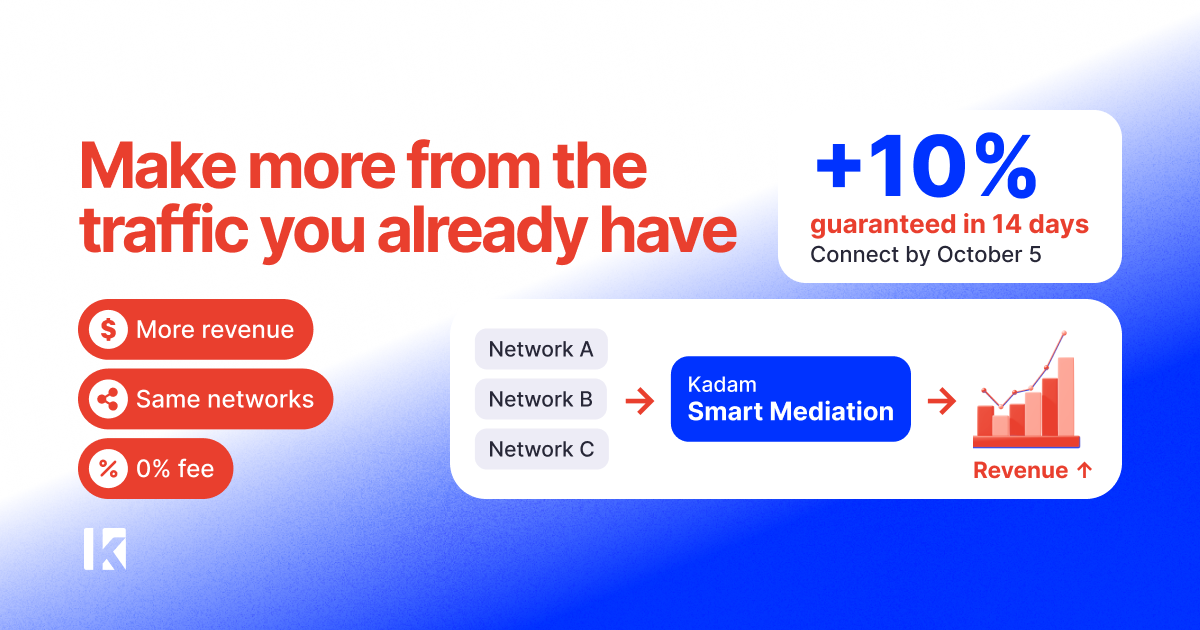
More Revenue from Existing Traffic: How Kadam Smart Mediation Works
Adult Website Monetization: Best Ways to Earn from Adult Traffic
How Ad Network Platforms Connect Advertisers and Publishers
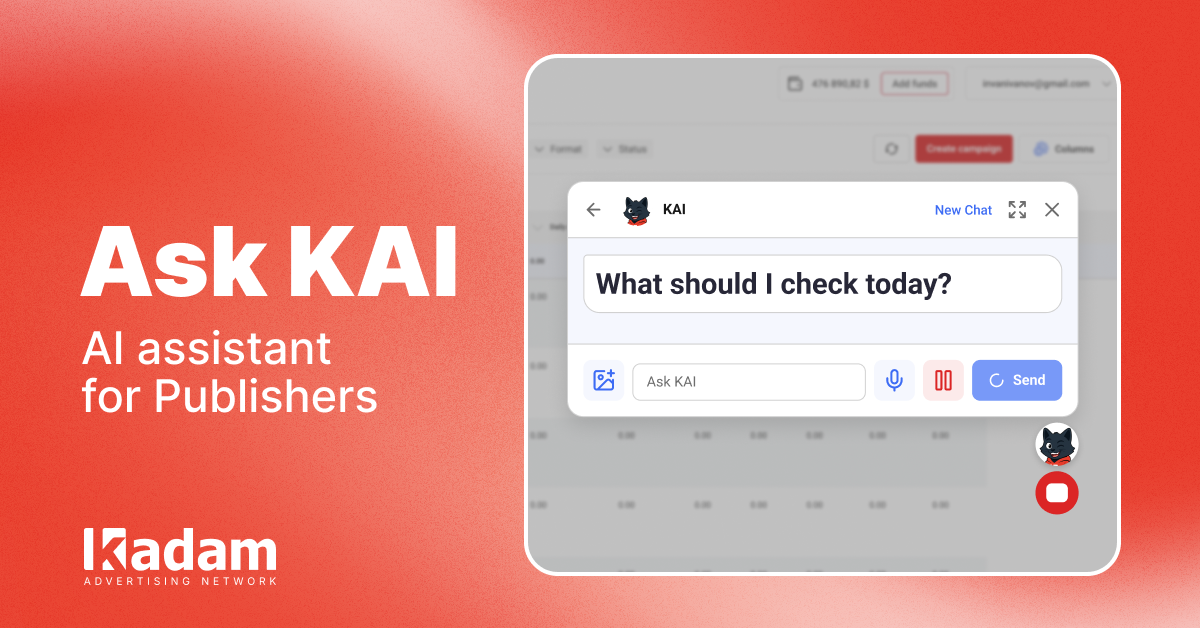
KAI for Publishers: Get Answers About Statistics and Monetization in Seconds
VAST Video Ads: A New Monetization Format Is Now Available in Kadam
Push Notifications: Easily Migrate Your Subscriber Base and Connect Multiple Providers on One Domain
Popunder CPM for Publishers: What Affects Website Revenue
Frequency Capping: Full Guide to Increase Popunder Revenue
Popunder Ads for Publishers: How Website Owners Earn from Pop Traffic